
11 instrument types · Industrial instruments
Pressure Instruments
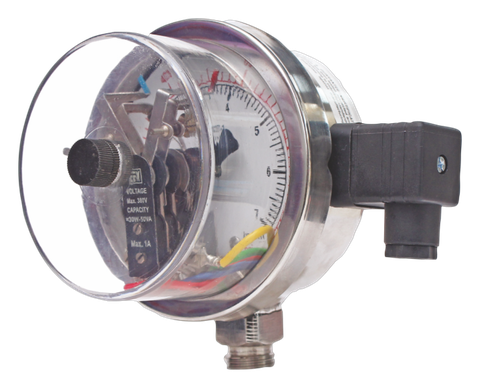
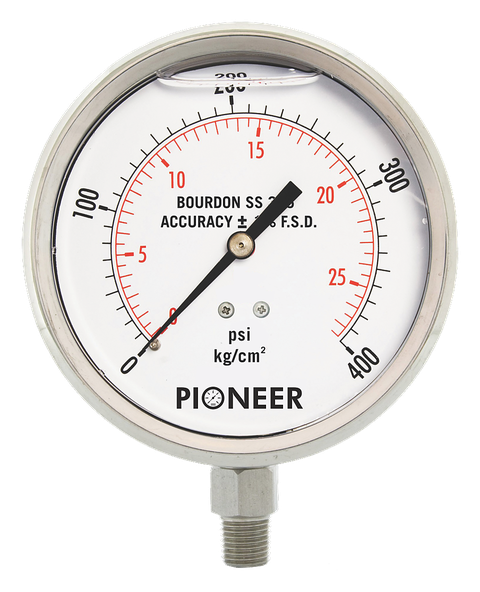
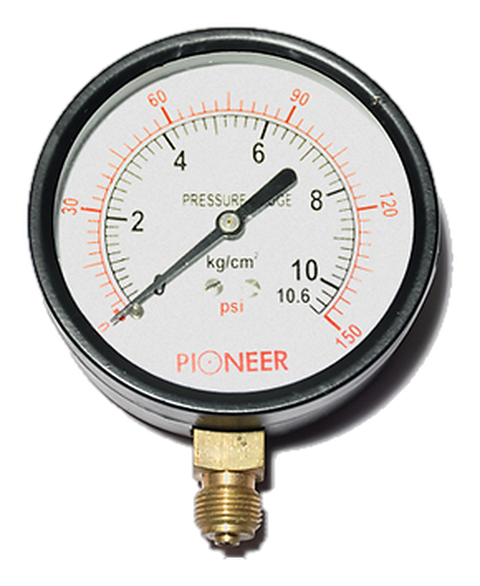
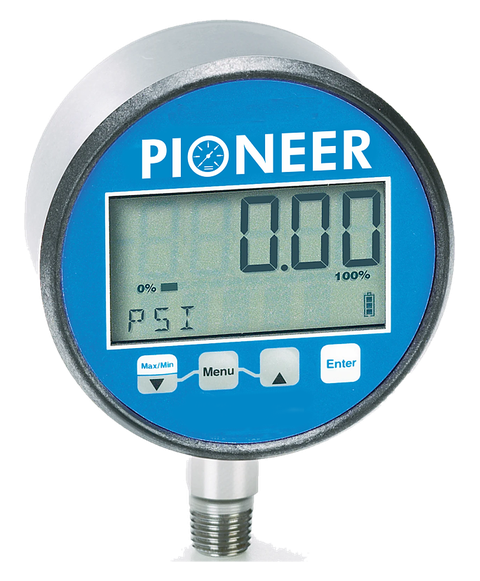
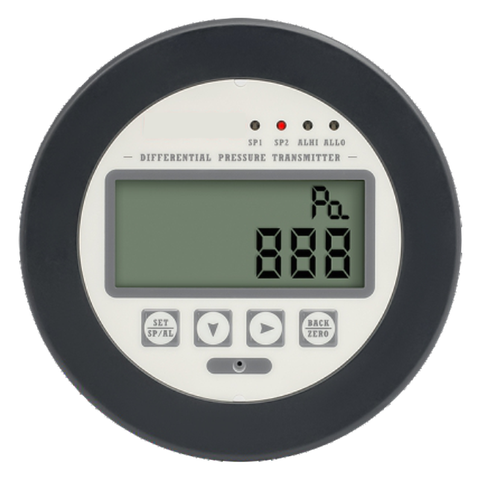
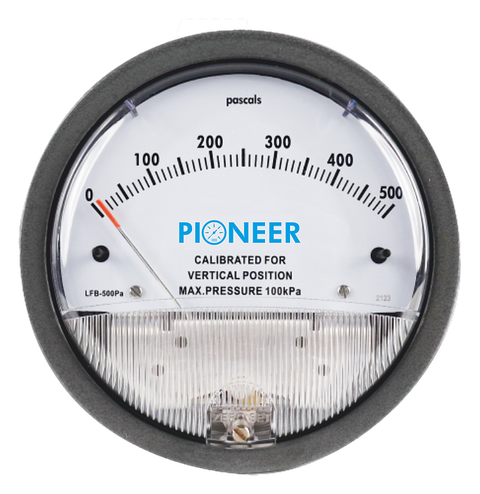
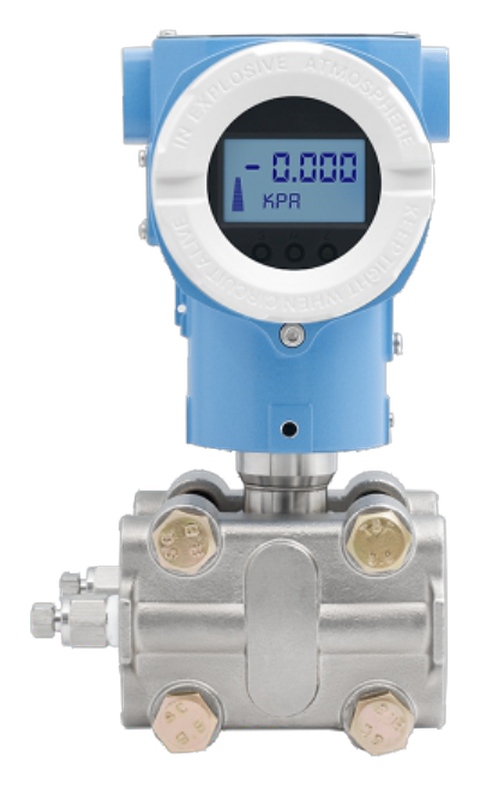
Pioneer Industrial Instruments, Pune, supplies pressure instruments for process plant, utilities and HVAC: Bourdon, diaphragm and digital pressure gauges, test gauges, pressure switches, pressure and differential pressure transmitters, and low differential pressure (Magnehelic-type) gauges. Gauges cover 0–1 to 0–600 kg/cm², and low DP gauges read from 0–60 Pa.

Which to choose
Match the job to the instrument.
A quick guide. Send your data sheet and we will confirm the model.
| If you need to… | Choose |
|---|---|
| Read line pressure locally on water, oil, air or process lines | All-stainless Bourdon pressure gauge |
| Read pressure outdoors, on rooftops or in wash-down areas | Weather proof pressure gauge, IP 65 / IP 67 |
| Fit an economical gauge on indoor hydraulics or pneumatics | Commercial pressure gauge |
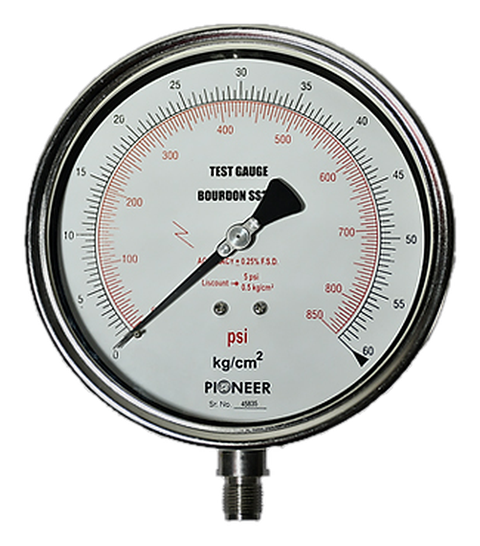
| Check working gauges or witness a hydro test | Test gauge, ±0.25% FSD |
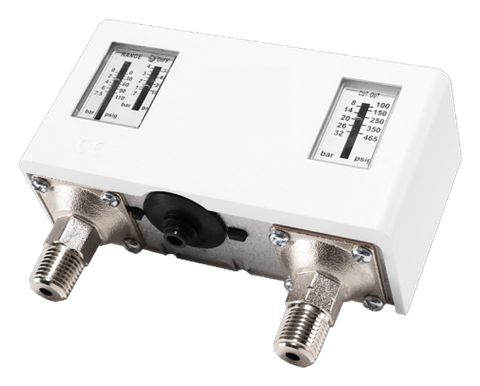
| Start/stop a pump or raise a high/low pressure alarm | Pressure switch |
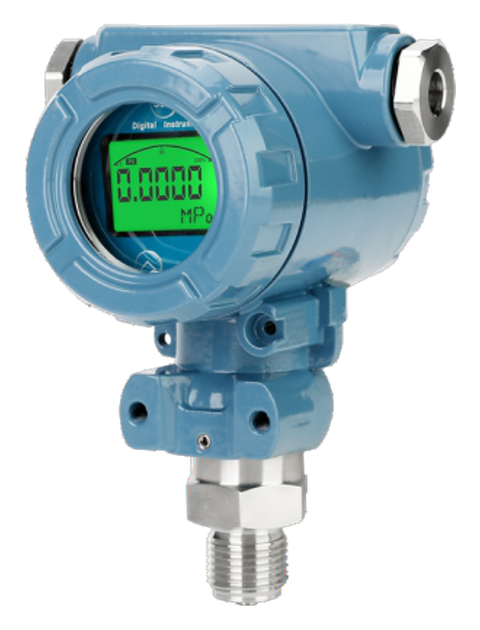
| Send line pressure to a PLC, DCS or BMS | Pressure transmitter, 4–20 mA |
| Monitor an AHU filter or cleanroom pressure in pascals | Magnehelic-type low differential pressure gauge |
| Send filter, flow or level DP to a control system | Differential pressure transmitter |
Overview
How we supply pressure instruments.
Pressure instruments fall into three jobs. Gauges give a local reading, switches give an on/off signal at a set pressure, and transmitters send a continuous 4–20 mA or 0–10 V signal to a PLC, DCS, SCADA system or BMS. Most systems use a mix: a gauge at the pump for the operator, a transmitter for the control loop, and a switch for the safety trip.
The second choice is between gauge and differential pressure. Gauge-pressure instruments read line pressure against atmosphere. Differential instruments read the difference between two points, such as across a filter, an orifice plate or a cleanroom wall. For air at a few hundred pascals, use a low differential pressure gauge or air DP transmitter; for liquids and process lines, use stainless steel DP gauges or industrial DP transmitters.
Pioneer's standard all-stainless Bourdon gauge has an SS 316 tube and socket and an SS 304 case rated IP 65 / IP 67, with ±1% FSD accuracy to IS 3624. Test gauges reach ±0.25% FSD. Send your range, medium, connection and quantity with your enquiry; quotations are typically issued within 48 hours.
For consultants
Tender-ready clauses for every instrument in this category, ready to paste.
Do I need a gauge, a switch or a transmitter?
Use a gauge when someone needs to read the pressure at the equipment. Use a switch when the system only needs to act at one pressure, for example to stop a pump, start a compressor or raise an alarm. Use a transmitter when the control system needs the actual value continuously, for control loops, trending or remote alarms. Many installations fit a gauge and a transmitter on the same tapping.
What is the difference between gauge, absolute and differential pressure?
Gauge pressure is measured against local atmospheric pressure and is what most process, utility and HVAC readings use. Absolute pressure is measured from a perfect vacuum and is used for vacuum and vapour-pressure work. Differential pressure is the difference between two process points, such as across a filter, an orifice plate or a room boundary. Pioneer supplies instruments for all three.
How do I size the range of a pressure instrument?
For gauges, choose a full scale of about twice the normal working pressure, keeping the maximum working pressure below about 75% of full scale. For transmitters, set the span so normal operation sits around mid-range, with headroom for surges. For differential instruments, put the alarm or change-out value at roughly 50% to 75% of the range.
Which pressure instruments suit corrosive or viscous media?
Specify SS 316 wetted parts as a minimum. For media that would block or attack a Bourdon tube or a threaded sensor port, use a diaphragm gauge, a flush diaphragm transmitter with a flanged end, or a remote diaphragm seal with capillary. Tell us the medium, temperature and concentration with your enquiry so the wetted materials can be checked.
What information should I send for a pressure instrument quotation?
Send the instrument type, range and units, medium and temperature, process connection size and thread, dial size or output signal, mounting, any filling or accessories, and the quantity. For differential instruments, also give the maximum line (static) pressure. Pioneer typically issues quotations within 48 hours of receiving a complete enquiry.
Other categories
More instruments.
- Temperature Instruments
- Level Instruments
- Flow Instruments
- Environmental Monitoring
- Gas Detection & IAQ
- Specialty Instruments
Engineering guides
- 01
Magnehelic-type vs digital DP gauges for cleanrooms
For any cleanroom pressure difference your risk assessment calls critical, use a digital differential pressure transmitter or room monitor wired to a…
- 04
How to select a pressure gauge: range, accuracy, fittings
Choose the range so that normal operating pressure sits in the middle third of the scale and the maximum working pressure stays below about 75% of…