Gas Detection & IAQ · FT
Air Velocity Meters — Air Flow and Velocity Transmitters for Fans and Ducts
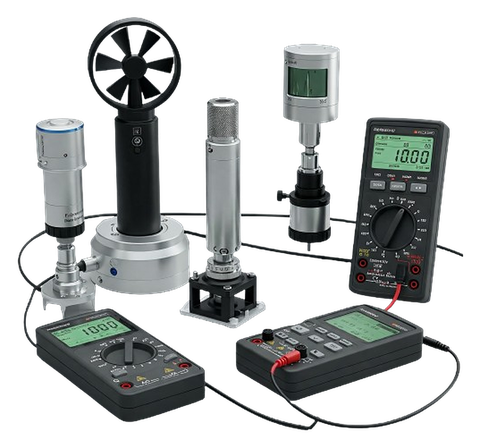
Pioneer supplies air velocity meters for HVAC: fixed air flow and velocity transmitters that read volume flow, velocity and pressure from a fan's measuring points or a duct, and duct-mounted velocity sensors for 0–15, 0–20 or 0–30 m/s. Portable hot-wire, vane and pitot-tube meters are also available for balancing and testing.
- Temperature compensated range: 0 to 50 °C
- Protection: IP54
Overview
What it does and where it fits.
Air velocity and volume flow tell you whether a fan, AHU or duct branch is delivering its design air quantity. Fixed transmitters feed the BMS continuously for VAV control, fan monitoring and filter loading trends. Portable meters are used during testing, adjusting and balancing, and for troubleshooting complaints of low air flow.
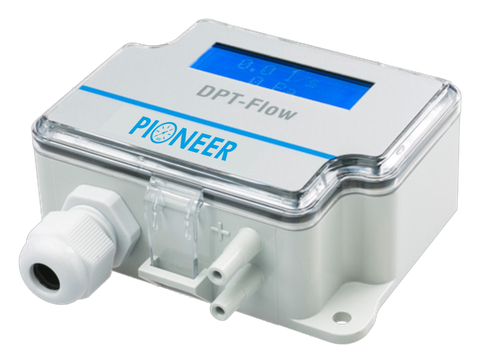
Pioneer's air flow and velocity transmitter uses a MEMS differential pressure sensing element with no flow-through, so dust in the air stream does not pass through the sensor. It connects directly to the pressure measuring points on a centrifugal fan or to a duct flow probe, and shows volume flow or velocity on the first display line and pressure on the second.
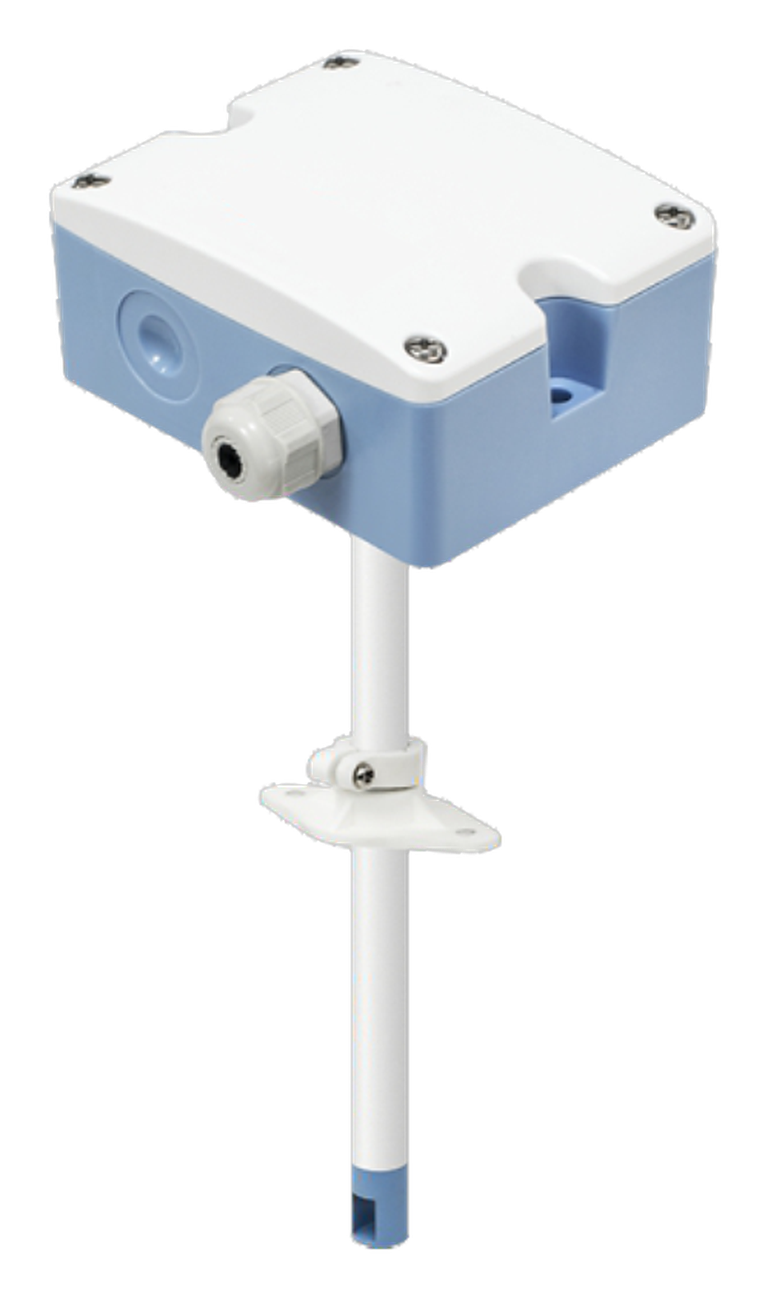
For single-point duct velocity, a duct-mounted air velocity sensor with 4–20 mA, 0–5 V, 0–10 V or RS485 output is available in 0–15, 0–20 and 0–30 m/s ranges, and can be used in air, nitrogen and oil-fume exhaust.
Types
- Air flow and velocity transmitterWall-mounted MEMS differential pressure transmitter that calculates volume flow or velocity from fan or duct measuring points, with a two-line display.
- Duct-mounted air velocity sensorInsertion probe for continuous duct velocity measurement in 0–15, 0–20 or 0–30 m/s ranges with analogue or RS485 output.
- Hot-wire anemometerHeated-wire probe for low velocities and small openings; sensitive and fast, but fragile and affected by dust.
- Vane anemometerRotating vane meter for grilles, diffusers and higher velocities; more robust than hot-wire, less sensitive at very low speeds.
- Pitot tubeReads total minus static pressure to give velocity; simple and low cost, used with a manometer or transmitter for duct traverses.
Features
- Volume flow, velocity, static and differential pressure from one transmitter
- MEMS sensing element with no flow-through
- Selectable units: m³/s, m³/h, cfm, l/s, m/s, ft/min, Pa, kPa, mbar, inWC, mmWC, psi
- Two-line display: flow or velocity on line 1, pressure on line 2
- IP54 enclosure, ABS case with PC lid
- Automatic zero calibration option
- Duct velocity sensors with 4–20 mA, 0–5 V, 0–10 V or RS485 output
Applications
- Air flow monitoring across centrifugal fans and blowers
- In-duct air flow monitoring
- VAV systems
- HVAC testing, adjusting and balancing
- Ventilation rate checks for indoor air quality
- Cleanroom air flow verification
- Laboratory and industrial exhaust monitoring
Specifications
Spec table.
Standard ranges and materials. Tell us your medium, range and connection and we will match the model.
| Parameter | Value |
|---|---|
| Measures | Volume flow, velocity, static and differential pressure |
| Media | Dry air or non-aggressive gases |
| Measuring element | MEMS, no flow-through |
| Flow units (selectable) | Volume: m³/s, m³/h, cfm, l/s; velocity: m/s, ft/min |
| Pressure units (selectable) | Pa, kPa, mbar, inWC, mmWC, psi |
| Display | 2-line, 12 characters per line (line 1 flow or velocity, line 2 pressure) |
| Operating temperature | -20 to 50 °C; with automatic zero calibration -5 to 50 °C; low-temperature model -40 to 50 °C |
| Temperature compensated range | 0 to 50 °C |
| Storage temperature | -40 to 70 °C |
| Humidity | 0 to 95 %RH, non-condensing |
| Protection | IP54 |
| Materials | Case ABS, lid PC, duct connectors ABS, tubing PVC |
| Mounting | 2 screw holes of 4.3 mm, one slotted |
| Electrical connection | 4-screw terminal block, wire 0.2–1.5 mm² (12–24 AWG) |
| Cable entry | M16 strain relief, 16 mm knockout |
Duct-mounted air velocity sensor
| Parameter | Value |
|---|---|
| Range | 0–15 m/s, 0–20 m/s, 0–30 m/s |
| Media | Air, nitrogen, oil-fume exhaust gas |
| Output | 4–20 mA, 0–5 V, 0–10 V, RS485 |
| Power supply | 10–30 V DC |
| Working temperature | -40 to +60 °C |
| Mounting | Duct mounted |
Output signal options for the fan/duct flow transmitter are confirmed per model at enquiry. Portable meter ranges on request.
For consultants
Consultant spec clause.
Paste it into your technical specification or BOQ, then adjust ranges and quantities to your schedule.
1. Air flow and velocity transmitters shall be provided on the fans, AHUs and duct branches shown on the drawings to measure and display air volume flow and velocity.
2. For fan air flow, the transmitter shall connect to the fan inlet pressure measuring points and calculate volume flow from the measured differential pressure; for duct velocity, a duct-mounted probe with a range of 0–15 m/s [0–20 / 0–30 m/s] shall be used.
3. The sensing element shall be MEMS type with no flow-through, suitable for dry air or non-aggressive gases.
4. The transmitter shall have a two-line display showing volume flow or velocity and pressure, with units selectable between m³/h, m³/s, l/s and cfm, m/s and ft/min, and Pa, kPa, mbar, mmWC and inWC.
5. Operating range shall be -20 to 50 °C [-40 to 50 °C] and 0–95 %RH non-condensing; the enclosure shall be IP54 with ABS case and polycarbonate lid.
6. Output shall be 4–20 mA [0–10 V or RS485] for connection to the BMS; wiring shall terminate on a screw terminal block through an M16 strain-relief cable entry.
7. Duct probes shall be installed in a straight duct run away from bends, dampers and fittings, as recommended by the manufacturer.
8. Each instrument shall be supplied with a manufacturer's test/calibration certificate and an installation and wiring diagram.
Make: Pioneer Industrial Instruments, Pune, or approved equivalent.
Should I use a hot-wire, vane or pitot-tube air velocity meter?
Use a hot-wire meter for low velocities, below about 2–3 m/s, and for small openings such as fume cupboard faces, as long as the air is clean. Use a vane meter at supply and return grilles and for higher velocities. Use a pitot tube with a manometer or transmitter for duct traverses at higher velocities and in dirty or hot air, where a hot-wire probe would not survive.
How does a differential pressure air flow transmitter measure fan air flow?
Many centrifugal fans have pressure measuring points at the inlet cone. Air flow is proportional to the square root of the differential pressure between these points, scaled by the fan maker's flow coefficient (k-factor). The transmitter reads that pressure with its MEMS sensor and shows volume flow in m³/h, l/s or cfm, together with the pressure, so no separate flow element is needed in the duct.
Where should a duct air velocity sensor be installed?
Install it in a straight run of duct where the velocity profile is settled. As a rule of thumb, allow at least five duct diameters downstream and two to three upstream of bends, dampers, fans, coils or branches. A single-point probe reads the velocity at one point, so in large or disturbed ducts use a multi-point averaging arrangement or calibrate the reading against a site traverse.
What is automatic zero calibration and when do I need it?
Low-range pressure sensors drift slightly over time and with temperature, which matters most at low velocities where the pressure signal is only a few pascals. Automatic zero calibration periodically re-references the sensor to zero and removes this drift without a site visit. It is worth specifying for VAV and low-flow monitoring. Pioneer's transmitter with this option operates from -5 to 50 °C.