
Temperature Instruments · TE
RTDs and Thermocouples — Pt100, Pt1000 and Type K, J, T Temperature Sensors
Pioneer supplies Pt100 and Pt1000 resistance temperature detectors (RTDs) for accurate, stable contact measurement, generally in the -200 to 600 °C band, and Type K, J, T, E, N, R, S and B thermocouples for faster response and higher temperatures.
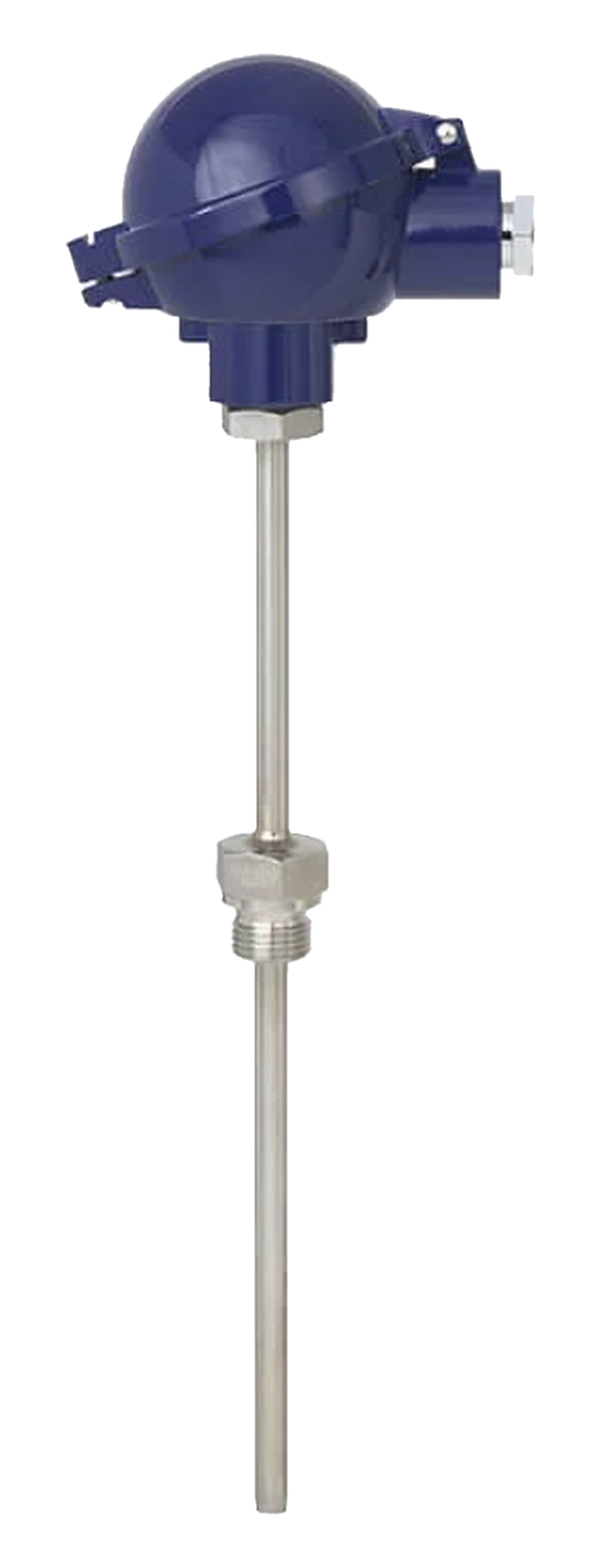
Overview
What it does and where it fits.
An RTD measures temperature through the change in electrical resistance of a platinum element. A Pt100 reads 100 Ω at 0 °C and a Pt1000 reads 1000 Ω. RTDs are more accurate, more stable and more linear than thermocouples, which makes them the usual choice for HVAC, pharmaceutical, food and general process control.
A thermocouple is two dissimilar metal wires joined at a hot junction. It produces a small voltage that rises with temperature. Thermocouples cover a far wider range, respond faster, cost less and stand up better to vibration, so they suit furnaces, ovens, exhaust gas, engine testing and plastics processing.
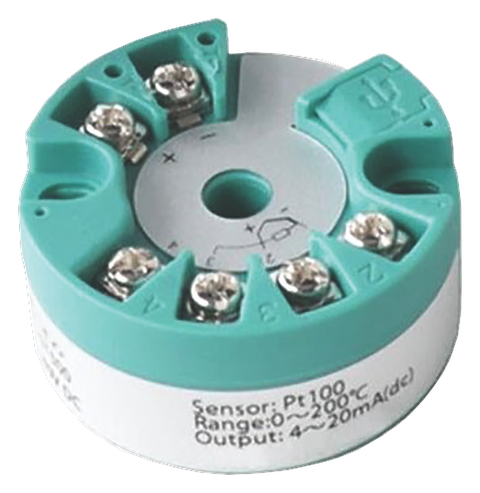
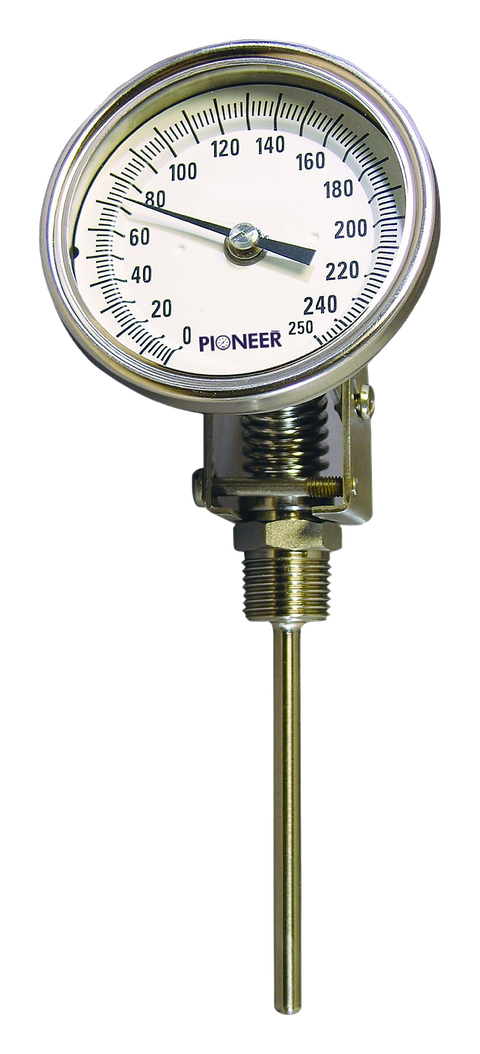
Either sensor is normally fitted in a thermowell and wired to an indicator, controller or PLC, or to a temperature transmitter that converts the signal to 4–20 mA. Send us the medium, operating temperature and pressure, insertion length and process connection, and we will propose the sensor and assembly.
Types
- Pt100 RTDThe most widely used RTD, 100 Ω at 0 °C, for accurate, repeatable measurement in HVAC and process lines.
- Pt1000 RTDHigher base resistance and sensitivity, so lead-wire resistance has less effect; common in BMS and HVAC controllers.
- Type K thermocoupleChromel-Alumel; the general-purpose choice balancing range, accuracy and cost.
- Type J and Type T thermocouplesIron-Constantan (J) for general use and Copper-Constantan (T) for low-temperature measurement.
- Type E, N, R, S and B thermocouplesFor specialised applications and higher temperature ranges, including furnaces and kilns.
Features
- Pt100 and Pt1000 platinum RTD elements
- Thermocouple types K, J, T, E, N, R, S and B
- RTDs: high accuracy, repeatability and long-term stability
- Thermocouples: wide range, fast response, rugged construction
- Can be paired with a temperature transmitter for a 4–20 mA signal
- Assemblies proposed to suit medium, insertion length and connection
Applications
- Chilled water, hot water and AHU temperature points in HVAC/R
- Industrial process control loops
- Pharmaceutical and food processing
- Furnaces, ovens and kilns
- Exhaust gas temperature and engine testing
- Plastics and rubber processing
- Laboratory and research
Specifications
Spec table.
Standard ranges and materials. Tell us your medium, range and connection and we will match the model.
| Parameter | Value |
|---|---|
| RTD elements | Pt100 (100 Ω at 0 °C), Pt1000 |
| RTD temperature band | Generally -200 to 600 °C, depending on construction |
| Thermocouple types | K (Chromel-Alumel), J (Iron-Constantan), T (Copper-Constantan), E, N, R, S, B |
| Thermocouple temperature band | Wide; depends on type (T for low temperatures, R, S, B for high temperatures) |
| Signal conversion | Via temperature transmitter to 4–20 mA where required |
RTD or thermocouple: quick comparison
| Feature | RTD | Thermocouple |
|---|---|---|
| Accuracy | Higher | Lower |
| Stability | Excellent | Good |
| Temperature range | Moderate (generally -200 to 600 °C) | Wide (depends on type) |
| Cost | Higher | Lower |
| Ruggedness | Moderate | High |
| Response time | Slower | Faster |
| Linearity | More linear | Less linear |
Sheath material, diameter, insertion length, terminal head, thermowell and process connection are selected per application and confirmed at enquiry.
For consultants
Consultant spec clause.
Paste it into your technical specification or BOQ, then adjust ranges and quantities to your schedule.
1. Temperature sensors for HVAC and general process duty shall be platinum resistance thermometers, Pt100 (100 Ω at 0 °C) [Pt1000 where specified for BMS controllers].
2. Sensors for high-temperature duty (furnaces, ovens, exhaust gas) shall be thermocouples of Type K [Type J, N, R, S or B as per the process temperature in the instrument schedule].
3. Each sensor shall be installed in a thermowell suited to the process medium, pressure and velocity, so that it can be removed without draining the line.
4. Insertion length, sheath material and process connection shall be as per the instrument schedule and pipe/vessel size.
5. Sensors shall be provided with a terminal head or cable termination suitable for the site location.
6. Where the signal is to be wired to a PLC, DCS or BMS over a long distance, a temperature transmitter with 4–20 mA output shall be provided.
7. Each sensor shall be supplied with a manufacturer's test certificate.
Make: Pioneer Industrial Instruments, Pune, or approved equivalent.
Should I use a Pt100 RTD or a thermocouple?
Use a Pt100 when accuracy and long-term stability matter and the temperature stays within the RTD band, generally -200 to 600 °C. That covers most HVAC, water, pharmaceutical and food duties. Use a thermocouple when the temperature is higher, when you need a fast response, or when vibration is severe, for example in furnaces, ovens, exhaust ducts and engine test beds.
What is the difference between Pt100 and Pt1000?
Both are platinum RTDs following the same curve. A Pt100 reads 100 Ω at 0 °C and a Pt1000 reads 1000 Ω. Because the Pt1000 signal is ten times larger, lead-wire resistance causes a smaller error, so it works well with 2-wire connections and the inputs of many BMS and HVAC controllers. Match the element to the input of the controller or transmitter.
Should I wire an RTD as 2-wire, 3-wire or 4-wire?
Lead resistance adds directly to an RTD reading. A 2-wire Pt100 with long cables can read a degree or more high. A 3-wire connection compensates for lead resistance and is the normal choice for industrial Pt100s. A 4-wire connection removes it almost completely and is used for laboratory or calibration work. Over long distances, a 4–20 mA transmitter near the sensor avoids the problem.
Which thermocouple type suits which temperature?
As general guidance: Type T suits low temperatures and cryogenic work; Type J is for general duty up to roughly 750 °C; Type K is the general-purpose type up to roughly 1,200 °C; Type N is similar to K with better stability at high temperature; Types R, S and B are platinum types for furnaces and kilns above that. Always check the limit for the sheath and thermowell as well.
How long should the sensor insertion be?
The sensing tip must sit in the flowing medium, not in the stagnant layer near the wall. A common rule is to place the tip near the centre third of the pipe and immerse the thermowell at least ten times its outside diameter where the pipe allows. On small pipes, mount the sensor in an elbow or at an angle to gain length.
Related
Often specified together.

Engineering guides
- 02
BTU meters for chilled water: selection and installation
A BTU meter (thermal energy meter) combines a flow sensor, a matched pair of temperature sensors and a calculator that integrates flow × temperature…
Read the guide - 06
RTD vs thermocouple: how to choose a temperature sensor
Choose a Pt100 RTD for most measurements from about −200 °C to 600 °C where accuracy and long-term stability matter, such as HVAC water, process…
Read the guide