Level Instruments · LS
Level Switches — Magnetic Float and Vibrating Fork Point Level Switches
Pioneer supplies point level switches for pump control, high and low alarms and overfill protection: magnetic float level switches with reed contacts in SS 304, PP or PVDF stems from 150 to 3000 mm, single or multiple switch points, and vibrating fork switches for liquids and powders.
- Housing protection: Up to IP65
- Wetted material: SS 304, PP or PVDF
Overview
What it does and where it fits.
A level switch gives an on-off signal when liquid (or solid) reaches a set height. It is the simplest way to start and stop pumps, raise high and low level alarms, and protect tanks from overfilling or pumps from running dry.
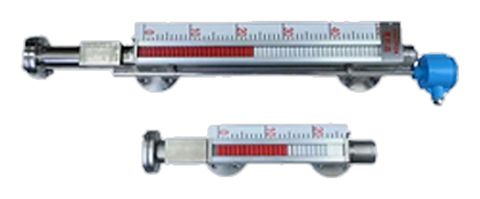
In Pioneer's magnetic float level switch, one or more reed switches are sealed inside a stem and a float carrying a permanent magnet rides up and down the stem between stop rings. When the float magnet reaches a reed switch, the contact opens or closes. Each reed switch is rated for up to 2 million operations, several switch points can be built on one stem, and all wiring terminates in a single housing rated up to IP65.
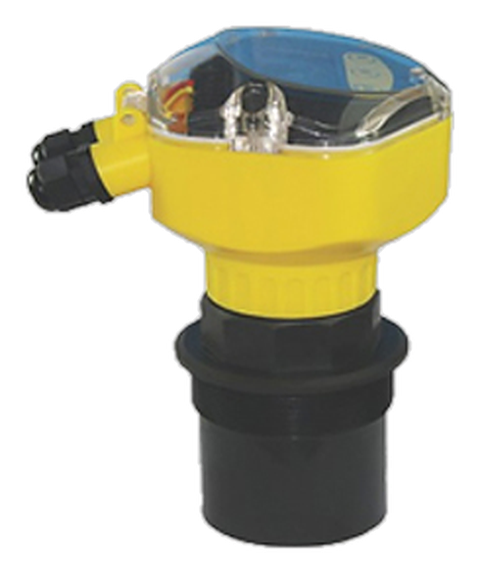
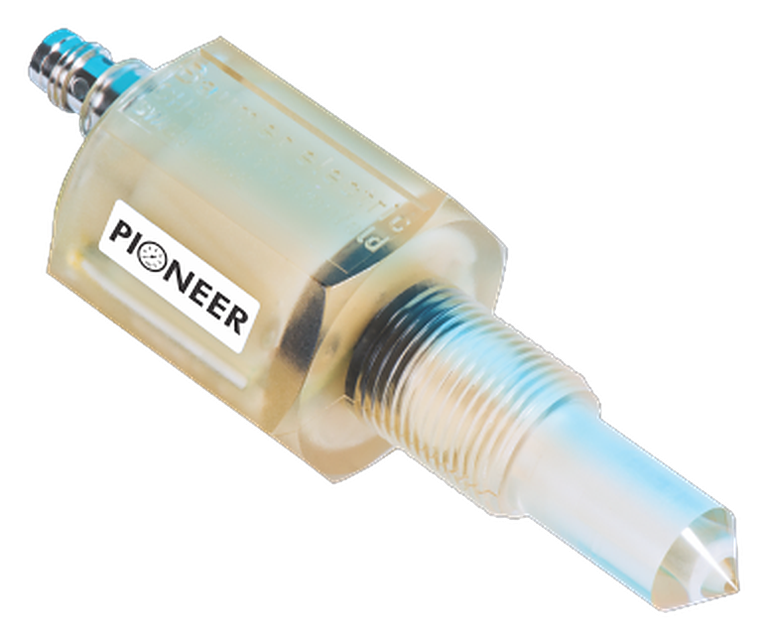
Vibrating fork switches have no moving float. A tuning fork vibrates at its natural frequency, and the vibration changes when the fork is covered. They are largely unaffected by foam, turbulence and moderate build-up, and they work in powders and granules as well as liquids.
Types
- Magnetic float level switch, single pointOne reed switch and float on a vertical stem for a single high or low point.
- Magnetic float level switch, multi-pointSeveral reed switches and floats on one stem for pump start/stop and high/low alarms from one nozzle.
- Vibrating fork level switchNo moving parts; for liquids including foaming or turbulent ones, and for powders and granules.
Features
- Reed switches operated by the float magnet, no power needed for switching
- Reed switch life up to 2 million operations
- Single or multiple switch points on one stem
- NO or NC contact configuration
- Insertion length 150 to 3000 mm
- Wetted parts in SS 304, PP or PVDF
- Small, large or multiple float options
- Housing protection up to IP65
Applications
- Pump on/off control
- High and low level alarms
- Tank overfill protection
- Dry-run protection for pumps
- Sump and wet-well pump control
- Water treatment, food and beverage, chemical and petrochemical tanks
- Hydraulic reservoirs and shipbuilding
Specifications
Spec table.
Standard ranges and materials. Tell us your medium, range and connection and we will match the model.
| Parameter | Value |
|---|---|
| Type | Magnetic float level switch (reed switch in stem) |
| Switch points | Single or multiple |
| Contact configuration | NO or NC |
| Contact rating | 40 VA (NO); 60 VA (C/O) |
| Reed switch life | Up to 2 million operations |
| Insertion length | 150 to 3000 mm |
| Wetted material | SS 304, PP or PVDF |
| Maximum temperature | 80 °C |
| Maximum pressure | 10 kg/cm² |
| Minimum liquid density | 0.6 g/cm³ |
| Housing protection | Up to IP65 |
| Options | Small, large or multiple floats; in-situ test device |
For hazardous areas, send the area classification and gas group and we will confirm what can be offered. Vibrating fork switch specifications are confirmed per model at enquiry.
For consultants
Consultant spec clause.
Paste it into your technical specification or BOQ, then adjust ranges and quantities to your schedule.
1. Level switches shall be magnetic float type, with hermetically sealed reed switches inside a vertical stem operated by a float carrying a permanent magnet.
2. Stem and float material shall be SS 304 [PP or PVDF for corrosive liquids], suitable for liquids of density 0.6 g/cm³ or more.
3. Number of switch points and their heights shall be as per the instrument schedule; contacts shall be NO or NC as required by the control logic.
4. Contact rating shall be 40 VA (NO) / 60 VA (C/O); loads above this shall be switched through interposing relays.
5. Insertion length shall suit the tank depth (150 to 3000 mm); service rating shall be up to 80 °C and 10 kg/cm².
6. All switch wiring shall terminate in a single top-mounted housing protected to IP65.
7. Switches shall be mounted away from inlets and turbulence; in agitated tanks a stilling pipe shall be provided; side-wall supports shall be used in concrete tanks.
8. Each switch shall be supplied with a manufacturer's test certificate.
Make: Pioneer Industrial Instruments, Pune, or approved equivalent.
Should I choose a float switch or a vibrating fork switch?
A magnetic float switch is simple, low cost and can carry several switch points on one stem, which suits clean liquids in water tanks, sumps and process vessels. A vibrating fork has no moving parts and is largely unaffected by foam, turbulence and moderate build-up, and it also works in powders and granules. Choose the fork for sticky, foaming or solid media.
How do I install a float level switch correctly?
Mount it well away from the liquid inlet, because strong splashing or surges cause false switching. If the switch is fitted through a standpipe, its bore must be larger than the float. In tanks with agitators, enclose the stem in a pipe shield or stilling pipe. In concrete tanks, use an L-type support bracket on the wall.
What is the minimum liquid density for a magnetic float switch?
Pioneer's float switches work in liquids with density of 0.6 g/cm³ or more, which covers water, most chemicals and many hydrocarbons. Lighter liquids such as some solvents and LPG need a specially sized float. State the liquid and its density in the enquiry so the right float is selected.
Can one float switch control a pump and give alarms?
Yes. A multi-point magnetic float switch has several reed switches at set heights on the same stem, each with its own float or travel zone. A typical set-up uses four points: low-low alarm or dry-run trip, pump start, pump stop and high alarm. All points wire back to one housing, so only one tank opening is needed.
Can the switch drive a pump motor directly?
No. Reed contacts are rated 40 VA (NO) or 60 VA (C/O), enough for a relay coil, PLC input or alarm lamp, not for a motor. Wire the switch to a relay, the pump starter's control circuit or a PLC input. Arrange the logic so that a broken wire leads to a safe state, for example a low-level trip.