Specialty Instruments · AI
pH and Conductivity Meters — Portable, Benchtop and Combination Meters
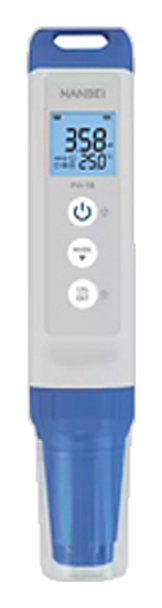
Pioneer supplies portable, benchtop and combination pH and conductivity meters, with pH electrodes and conductivity cells, for water treatment, process and laboratory testing. The portable pH meter reads to 0.01 pH with ±0.01 pH ±1 digit accuracy, measures ±1000 mV, and has 1 to 3 point calibration with automatic temperature compensation from 0 to 60 °C.
- mV range: -1000 to +1000 mV
- pH accuracy: ±0.01 pH ±1 digit
Overview
What it does and where it fits.
pH shows how acidic or alkaline a solution is; conductivity shows how much dissolved ionic material it carries. Together they are the two most common checks on water and aqueous process streams, from RO permeate and boiler feed water to effluent, cooling tower water, food and pharmaceutical process water.
Choose a portable meter for field and plant-floor checks, a benchtop meter for laboratory work where more calibration points, data storage and stability matter, and a combination meter when one instrument must cover both pH and conductivity. The electrode or conductivity cell is the part that does the measuring, so match it to the sample: general purpose, low-conductivity water, viscous or solids-laden samples, or high temperature.
Pioneer's portable pH meter also reads ORP in millivolts and temperature, so the same instrument can check oxidation-reduction potential in chlorination and effluent treatment.
Types
- Portable pH meterHandheld meter with 0.01 pH resolution, mV and temperature readings, and automatic temperature compensation for field and plant use.
- Benchtop pH / conductivity meterLaboratory meter with higher accuracy and more calibration and data features.
- Combination pH / conductivity meterOne instrument that measures both pH and conductivity.
- pH electrodesReplacement and application-specific electrodes for general, low-ionic, viscous or high-temperature samples.
- Conductivity cellsCells with cell constants chosen to suit pure water, general water or high-conductivity samples.
Features
- 0.01 pH resolution, ±0.01 pH ±1 digit accuracy
- 1 to 3 point pH calibration
- Automatic temperature compensation, 0 to 60 °C
- mV (ORP) range -1000 to +1000 mV
- Temperature reading with ±0.2 °C accuracy
- Portable, benchtop and combination formats
Applications
- Drinking water, wastewater, surface water and groundwater testing
- Boiler and cooling tower water treatment
- RO and DM water plants
- Industrial process control
- Food and beverage quality checks
- Pharmaceutical water and solutions
- Aquaculture and hydroponics
- Environmental monitoring of rivers and lakes
Specifications
Spec table.
Standard ranges and materials. Tell us your medium, range and connection and we will match the model.
| Parameter | Value |
|---|---|
| pH resolution | 0.01 pH |
| pH accuracy | ±0.01 pH ±1 digit |
| pH calibration | 1 to 3 points |
| Automatic temperature compensation | 0 to 60 °C |
| mV range | -1000 to +1000 mV |
| mV resolution | 0.1 / 1 mV |
| mV accuracy | ±0.1 % FS ±1 digit |
| Temperature range | 0 to 60 °C |
| Temperature accuracy | ±0.2 °C |
pH measuring range and conductivity meter specifications are confirmed per model at enquiry.
For consultants
Consultant spec clause.
Paste it into your technical specification or BOQ, then adjust ranges and quantities to your schedule.
1. Portable pH meters [benchtop pH/conductivity meters] shall be supplied for water and effluent testing as scheduled.
2. The pH meter shall have a resolution of 0.01 pH and an accuracy of ±0.01 pH ±1 digit.
3. The meter shall support 1 to 3 point calibration with standard buffer solutions and shall have automatic temperature compensation over 0 to 60 °C.
4. The meter shall also read mV (ORP) over -1000 to +1000 mV and sample temperature with ±0.2 °C accuracy.
5. Where conductivity is scheduled, the conductivity cell constant shall suit the sample range (low-conductivity water, general water or high-conductivity water).
6. Each meter shall be supplied with a pH electrode [and conductivity cell], calibration buffer solutions, electrode storage solution and a carrying case.
7. Each meter shall be supplied with a manufacturer's test/calibration certificate and operating instructions.
Make: Pioneer Industrial Instruments, Pune, or approved equivalent.
How often should a pH meter be calibrated?
For accurate work, calibrate at the start of each day or each batch of measurements. Use at least two buffers that bracket the expected sample pH, typically pH 7 and pH 4 for acidic samples or pH 7 and pH 10 for alkaline ones. Pioneer's portable meter supports 1 to 3 point calibration. Use fresh buffers, and rinse the electrode with distilled water between solutions.
Why is temperature compensation important for pH measurement?
The electrode's response changes with temperature, by about 0.2 % per °C in its slope, and the pH of the sample itself also changes with temperature. Automatic temperature compensation (ATC) corrects the electrode slope using a temperature reading taken at the same time. Pioneer's portable meter compensates from 0 to 60 °C. For comparable results, also record the sample temperature with each reading.
How should a pH electrode be stored?
Keep the glass bulb wet. Store it in electrode storage solution, usually 3 M KCl, or in pH 4 buffer if storage solution is not available. Never store it dry or in distilled water, because both slow the response and shorten electrode life. If the electrode has dried out, soak it in storage solution for several hours before calibrating. Replace electrodes that respond slowly or will not calibrate.
Which conductivity cell constant should I choose?
Match the cell constant (K) to the expected conductivity. A K = 0.1 cell suits pure water such as RO permeate, DM water and boiler feed water. K = 1.0 suits most general water, including drinking water and cooling tower water. K = 10 suits high-conductivity samples such as brine and some effluents. A cell outside its best range gives poor resolution or polarisation errors.
Related