Temperature Instruments · MT
Duct Humidity and Temperature Transmitters — RH and Temperature Sensors for HVAC Ducts
Pioneer supplies duct humidity and temperature transmitters that measure 0–100% RH and -50 to +50 °C, with ±2% RH typical (±3% RH maximum) and ±0.5 °C accuracy at 25 °C, 4–20 mA or 0–10 V outputs, and optional local display or Modbus RTU, for AHU and ventilation ducts.
- Humidity range: 0 to 100% RH
- Humidity accuracy at 25 °C: ±2% RH typical (20–80% RH); ±3% RH maximum
- Materials: PBT, PC, PA and stainless steel
Overview
What it does and where it fits.
A duct humidity and temperature transmitter sits in the airstream of an AHU or ventilation duct and sends relative humidity and temperature to the BMS. The BMS uses the readings to control cooling, reheat, humidifiers and fresh-air dampers, and to track indoor air quality.
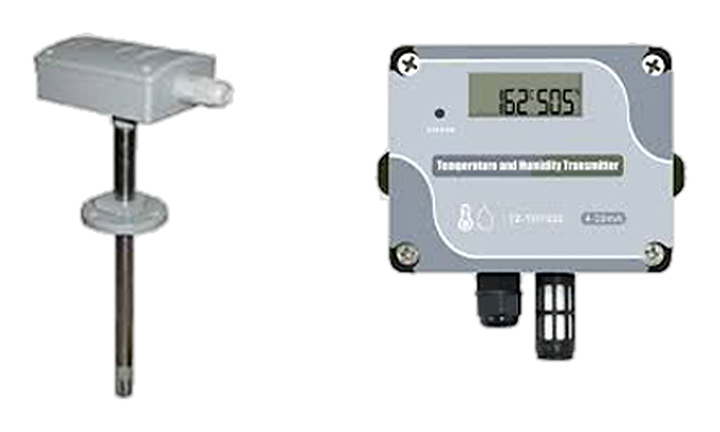
Pioneer's transmitter mounts on a flange with adjustable probe depth and runs on 24 V AC/DC (21–28 V), 2 VA. Analogue outputs are 0–10 V, 2–10 V or 0–5 V DC, or 4–20 mA. Display versions have a backlit dot-matrix display; Modbus versions communicate over RS-485 (Modbus RTU), with the Modbus settings made at commissioning.
Humidity accuracy at 25 °C is ±2% RH typical between 20 and 80% RH and ±3% RH maximum, with long-term stability of ±0.5% RH over 24 months. The transmitter housing is IP54 when installed with the probe or cable gland facing down; the sensing element is IP20, so keep it out of water spray and condensing air.
Types
- Analogue transmitter4–20 mA or 0–10 V, 2–10 V, 0–5 V outputs for RH and temperature, wired to BMS analogue inputs.
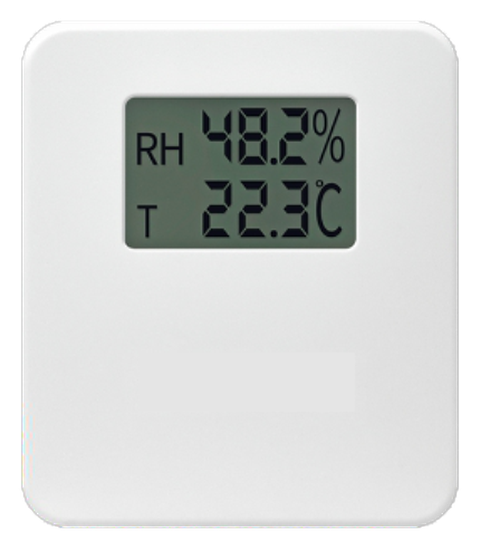
- Display versionAdds a backlit dot-matrix display so RH and temperature can be read at the duct.
- Modbus versionRS-485 Modbus RTU communication for BMS networks, reducing analogue wiring on large projects.
Features
- Combined RH and temperature measurement
- ±2% RH typical (20–80% RH), ±3% RH maximum at 25 °C
- ±0.5 °C temperature accuracy at 25 °C
- Long-term stability ±0.5% RH over 24 months
- 4–20 mA or 0–10 V, 2–10 V, 0–5 V outputs
- Modbus RTU over RS-485 (Modbus version)
- Backlit dot-matrix display (display version)
- Flange mounting with adjustable probe depth
Applications
- AHU supply, return and fresh air monitoring
- Humidity control in pharmaceutical, hospital and cleanroom HVAC
- Data centre supply and return air monitoring
- Condensation risk monitoring in ducts
- Demand-controlled ventilation and BMS energy optimisation
- Museums, archives and storage areas
Specifications
Spec table.
Standard ranges and materials. Tell us your medium, range and connection and we will match the model.
| Parameter | Value |
|---|---|
| Humidity range | 0 to 100% RH |
| Humidity accuracy at 25 °C | ±2% RH typical (20–80% RH); ±3% RH maximum |
| Humidity long-term stability | ±0.5% RH per 24 months |
| Temperature range | -50 to +50 °C |
| Temperature accuracy at 25 °C | ±0.5 °C |
| Analogue outputs | 0–10 V, 2–10 V or 0–5 V DC (load < 2 mA); 4–20 mA (load < 500 Ω) |
| Communication (Modbus version) | Modbus RTU over RS-485 |
| Display (display version) | Backlit dot-matrix |
| Supply | 24 V AC/DC (21–28 V), 2 VA |
| Mounting | Flange, adjustable probe depth |
| Protection | Transmitter IP54 (probe or cable gland downwards); sensor IP20 |
| Operating conditions | -30 to +50 °C, 0–90% RH non-condensing |
| Dimensions | 70 (W) x 98 (H) x 220 (D) mm |
| Materials | PBT, PC, PA and stainless steel |
For higher duct temperatures, a wall-mount sensor with a remote high-temperature probe (-40 to +120 °C) is covered on the humidity measurement page.
For consultants
Consultant spec clause.
Paste it into your technical specification or BOQ, then adjust ranges and quantities to your schedule.
1. Duct humidity and temperature sensors shall be combined RH and temperature transmitters, flange mounted with adjustable probe depth.
2. Measuring range shall be 0–100% RH and -50 to +50 °C.
3. Accuracy at 25 °C shall be ±2% RH typical between 20 and 80% RH (±3% RH maximum) and ±0.5 °C; long-term RH stability shall be ±0.5% RH over 24 months.
4. Outputs shall be 4–20 mA for RH and temperature [0–10 V DC where the BMS input requires] [Modbus RTU over RS-485 where the BMS integrates by network].
5. Supply shall be 24 V AC/DC.
6. Transmitter housing shall be IP54, installed with the probe or cable gland facing downwards; a local display shall be provided where specified.
7. Sensors shall be installed in a straight duct section with well-mixed air, downstream and clear of humidifiers, coils and dampers, with the probe tip in the main airstream.
8. Each transmitter shall be supplied with a manufacturer's test certificate.
Make: Pioneer Industrial Instruments, Pune, or approved equivalent.
FAQ
Questions about Duct Humidity and Temperature Sensors.
Anything else? Call or WhatsApp +91 93700 39974.
Where should a duct humidity sensor be installed?
Put it in a straight run of duct where the air is well mixed, away from humidifiers, cooling coils, reheat coils, dampers and fan discharge. A common guide is several duct diameters downstream of a humidifier or coil, so mist and stratified air do not reach the probe. Set the adjustable probe depth so the tip sits in the main airstream, and seal the mounting flange.
Should I choose the analogue, display or Modbus version?
Choose analogue (4–20 mA or 0–10 V) when the BMS controller has spare analogue inputs near the AHU. Choose the display version when maintenance staff need to read conditions at the duct. Choose the Modbus RTU version when many sensors share one RS-485 network, which cuts cabling and gives the BMS both readings over one connection.
Can the sensor be used in saturated or condensing air?
The electronics are rated for 0–90% RH non-condensing and the sensing element is IP20. Liquid water on the element, such as mist from a humidifier or carry-over from a cooling coil, gives false high readings and shortens sensor life. Install the transmitter away from such sources, and mount it with the probe or cable gland facing down to keep the IP54 rating.
How accurate is the RH reading, and does it drift?
At 25 °C the transmitter is ±2% RH typical between 20 and 80% RH and ±3% RH at worst, with ±0.5 °C on temperature. Long-term stability is ±0.5% RH over 24 months. For comfort HVAC that is ample; for critical rooms, check against a reference handheld meter once a year.
How do duct RH sensors help save energy?
Accurate supply and return RH lets the BMS dehumidify only as much as needed, instead of overcooling and reheating air to be safe. It also enables enthalpy-based economiser control, where fresh air is used for free cooling when its heat content is lower than return air. Both reduce chiller and reheat energy, especially in humid climates.