Temperature Instruments · MT
Humidity and RH Measurement — Sensors, Transmitters and Meters
Pioneer supplies relative humidity (RH) and temperature instruments for HVAC, cleanrooms, data centres, warehouses and process areas: wall-mount sensors with display (-40 to +80 °C, 0–100% RH, ±3% RH, ±0.5 °C, RS485 and 4–20 mA), duct transmitters (±2% RH typical), and handheld meters for spot checks.
- Humidity range: 0 to 100% RH
- Housing size: 110 x 85 x 44 mm
- Accuracy: ±0.5 °C at 25 °C; ±3% RH at 60% RH, 25 °C
Overview
What it does and where it fits.
Relative humidity is the amount of water vapour in air as a percentage of the most it could hold at that temperature. Because RH changes with temperature, humidity and temperature are almost always measured together, and dew point is calculated from the two.
Humidity control matters for comfort, for preventing mould and condensation, for protecting stored materials and electronics, and for processes such as pharmaceutical manufacturing and storage. In HVAC it also drives energy use, since over-dehumidifying wastes cooling energy.
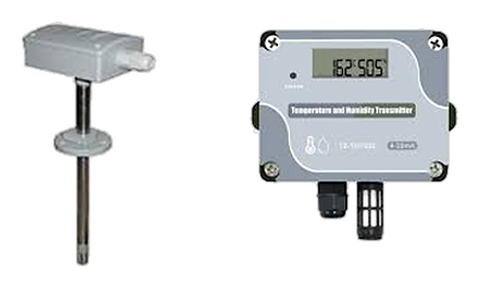
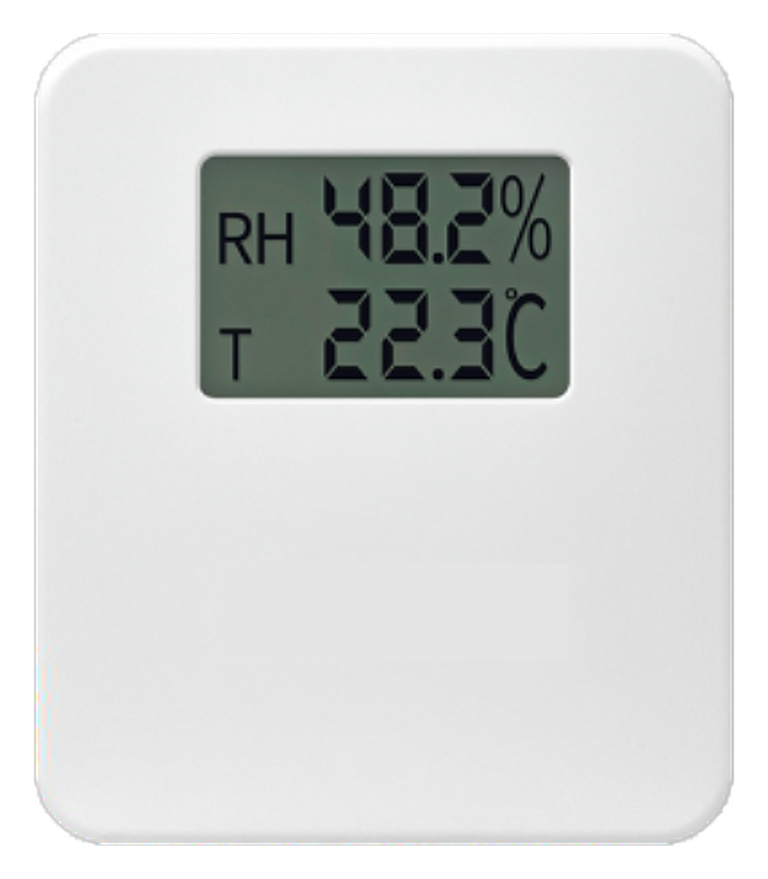
Pioneer's wall-mount temperature and humidity sensor has a high-brightness digital display and outputs RS485 (Modbus), 4–20 mA, 0–5 V or 0–10 V on a 10–30 V DC supply. Its probe is replaceable: the standard probe covers -40 to +80 °C, a high-temperature probe extends this to +120 °C, and a waterproof probe measures liquid temperature. Readings can be passed through a host to a PC, tablet or phone app.
Types
- Wall-mount sensor with displayRoom unit showing %RH and °C locally, with RS485, 4–20 mA or voltage output and replaceable probes.
- Duct humidity and temperature transmitterFlange-mounted probe transmitter for AHU and ventilation ducts, with analogue or Modbus RTU output.
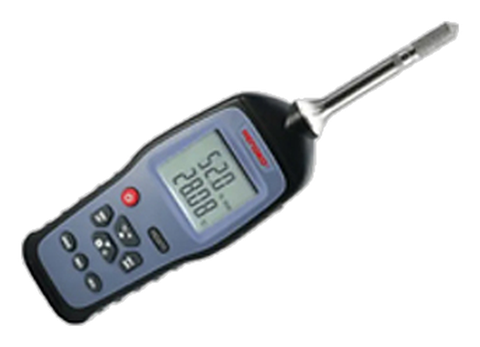
- Handheld temperature and humidity meterPortable meter for spot checks, commissioning and IAQ surveys.
Features
- Temperature and relative humidity measured together
- High-brightness digital display, readable in dark or bright conditions
- RS485 (Modbus), 4–20 mA, 0–5 V and 0–10 V outputs
- Replaceable probes, including high-temperature and waterproof types
- Circuit board treated against dust, smoke and mildew
- Built-in anti-interference module
- Wide 10–30 V DC supply
Applications
- AHU and HVAC duct monitoring and humidity control
- Data centres and server rooms
- Pharmaceutical areas, laboratories and cleanrooms
- Museums, archives and record rooms
- Warehouses, cold rooms and storage
- Greenhouses and grow rooms
- Industrial process areas
Specifications
Spec table.
Standard ranges and materials. Tell us your medium, range and connection and we will match the model.
| Parameter | Value |
|---|---|
| Instrument | Wall-mount temperature and humidity sensor with display |
| Temperature range | -40 to +80 °C (standard probe); -40 to +120 °C (high-temperature probe) |
| Humidity range | 0 to 100% RH |
| Accuracy | ±0.5 °C at 25 °C; ±3% RH at 60% RH, 25 °C |
| Long-term stability | Temperature ≤ 0.1 °C per year; humidity ≤ 1% RH per year |
| Response time (air at 1 m/s) | Temperature ≤ 25 s; humidity ≤ 8 s |
| Output | RS485 (Modbus), 4–20 mA, 0–5 V, 0–10 V |
| Supply | 10–30 V DC |
| Electronics operating conditions | -40 to +60 °C, 0–80% RH |
| Housing size | 110 x 85 x 44 mm |
Duct humidity and temperature transmitter (summary)
| Parameter | Value |
|---|---|
| Humidity range and accuracy | 0–100% RH; ±2% RH typical (20–80% RH), ±3% RH maximum at 25 °C |
| Temperature range and accuracy | -50 to +50 °C; ±0.5 °C at 25 °C |
| Outputs | 4–20 mA; 0–10 V, 2–10 V or 0–5 V DC; Modbus RTU (Modbus version) |
| Supply | 24 V AC/DC (21–28 V) |
| Protection | Transmitter IP54; sensor IP20 |
Full duct transmitter specifications are on the duct sensor page. Handheld meter ranges are confirmed per model at enquiry.
For consultants
Consultant spec clause.
Paste it into your technical specification or BOQ, then adjust ranges and quantities to your schedule.
1. Room temperature and humidity shall be measured by wall-mount combined temperature and RH transmitters with integral digital display.
2. Measuring range shall be -40 to +80 °C and 0–100% RH [-40 to +120 °C with high-temperature probe where specified].
3. Accuracy shall be ±0.5 °C at 25 °C and ±3% RH at 60% RH and 25 °C; long-term drift shall not exceed 0.1 °C and 1% RH per year.
4. Output shall be 4–20 mA [0–5 V or 0–10 V] [RS485 Modbus where the BMS integrates by network].
5. Supply shall be 10–30 V DC.
6. Sensors shall be located at representative points away from supply diffusers, doors, direct sun and heat sources.
7. Duct-mounted measurement shall be by flange-mounted duct humidity and temperature transmitters, specified separately.
8. Each instrument shall be supplied with a manufacturer's test certificate.
Make: Pioneer Industrial Instruments, Pune, or approved equivalent.
What is the difference between relative humidity and dew point?
Relative humidity is the water vapour in air as a percentage of saturation at the current temperature, so it changes when the air warms or cools even if the moisture content does not. Dew point is the temperature at which that air would start to condense. Dew point tells you condensation risk on cold surfaces; RH tells you comfort and material conditions. A sensor measuring both lets the BMS calculate dew point.
Which humidity instrument should I choose: duct, wall or handheld?
Use a duct transmitter where the AHU control loop needs supply or return air RH. Use a wall-mount sensor for room conditions in data centres, stores, laboratories and offices; Pioneer's has a display, so staff can read it locally. Use a handheld meter for commissioning, audits and checking fixed sensors. Many projects use all three.
How accurate does a humidity sensor need to be?
For comfort HVAC and most BMS monitoring, ±3% RH is adequate, because comfort bands are usually 40–60% RH. Pioneer's wall sensor is ±3% RH and ±0.5 °C; the duct transmitter is ±2% RH typical. Pharmaceutical stability rooms or calibration work may need tighter tolerances, so state the required accuracy in the enquiry.
Can one sensor measure liquid temperature or hot air above 80 °C?
Yes, by changing the probe. The wall-mount sensor's standard probe covers -40 to +80 °C. A high-temperature probe extends the range to +120 °C, for example for ovens or dryer exhausts, and a waterproof probe measures liquid temperature. The electronics stay in the wall housing, rated -40 to +60 °C.
How often should RH sensors be checked?
Capacitive RH sensors drift slowly; Pioneer's wall sensor is rated at 1% RH per year or less. Drift is faster in dusty, chemically contaminated or near-saturated air. A yearly check against a reference meter is a sensible minimum for HVAC; critical areas often check every six months.
Related