Gas Detection & IAQ · AT
CO & CO2 Sensors — Carbon Monoxide and Carbon Dioxide Detectors
Pioneer supplies carbon monoxide (CO) sensors for car parks, boiler rooms and process areas, and carbon dioxide (CO2) sensors for demand-controlled ventilation. CO sensing is electrochemical or semiconductor; CO2 sensing is non-dispersive infrared (NDIR), and a portable CO2 monitor covers 400–5,000 ppm.
- Portable CO2 monitor range: 400–5,000 ppm, 1 ppm sensitivity
- Wireless CO sensor size: 115 x 90 x 55 mm / 70 x 65 x 35 mm
- CO2 sensing principle: Non-dispersive infrared (NDIR)
Overview
What it does and where it fits.
CO and CO2 are measured for different reasons. CO is a toxic product of incomplete combustion from vehicles, boilers, generators and furnaces; it has no colour or smell, so a fixed sensor is the only practical warning. CO2 is rarely the hazard in a building; it is a proxy for occupancy and for how well a space is being ventilated.
In basement car parks, a network of CO sensors stages the jet fans and exhaust fans so they run only when vehicle exhaust builds up. In offices, schools, auditoriums and hospitals, CO2 sensors reset outdoor air dampers or AHU fresh-air quantities (demand-controlled ventilation), which cuts the energy spent conditioning outdoor air.
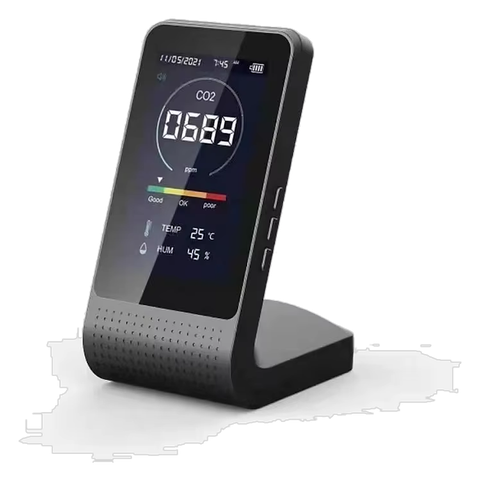
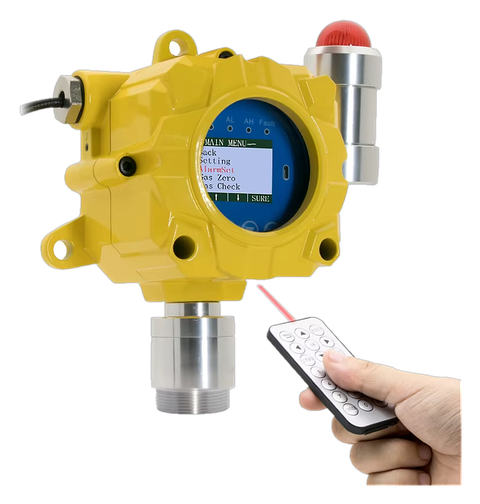
Pioneer supplies fixed CO and CO2 sensors for BMS and fan control, a wireless CO sensor in a waterproof metal enclosure for sites where cabling is difficult, and portable CO2 monitors that also read temperature and humidity. CO2 sensors are also used in greenhouses, fermentation areas in breweries and wineries, and laboratory incubators.
Types
- Electrochemical CO sensorGas-specific cell that produces a current proportional to CO concentration; the usual choice for car parks and plant rooms.
- Semiconductor (metal oxide) CO sensorLower-cost sensor whose resistance changes in the presence of CO; less selective, so better suited to indication than to measurement.
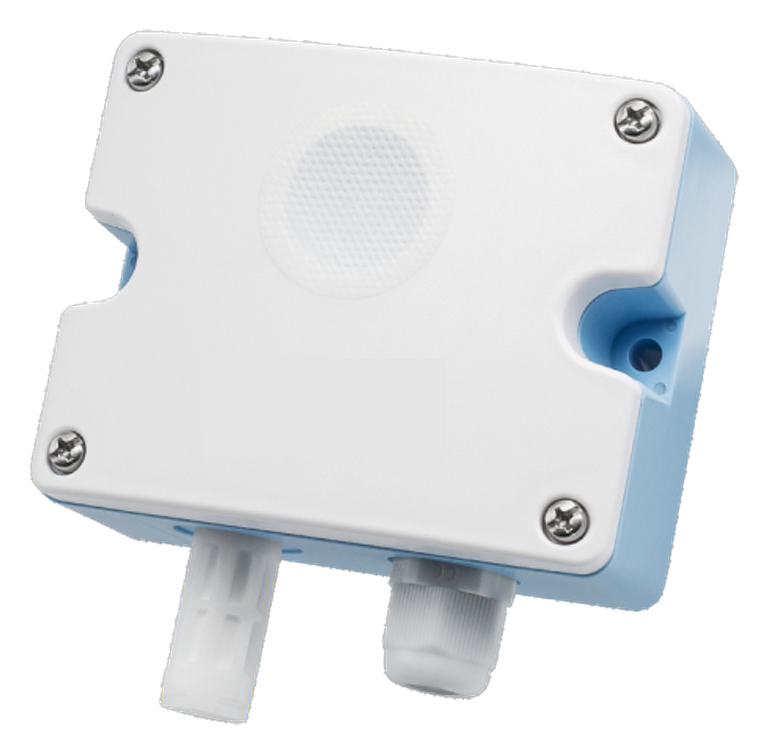
- Wireless CO sensorProgrammable CO sensor in a waterproof metal enclosure with analogue and digital display, for areas where cabling is impractical.
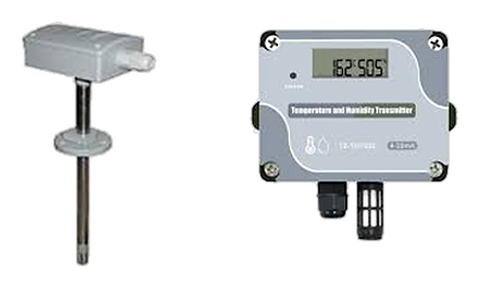
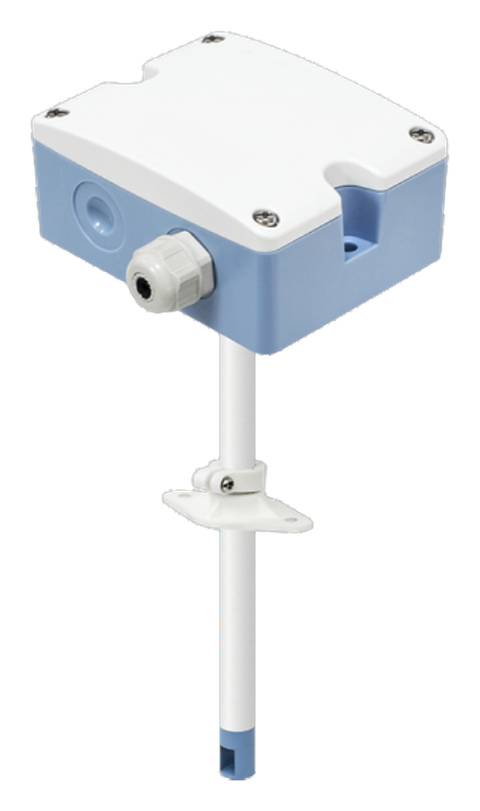
- NDIR CO2 sensorInfrared absorption sensor for demand-controlled ventilation and indoor air quality; stable and specific to CO2.
- Portable CO2 monitorRechargeable CO2, temperature and humidity monitor (400–5,000 ppm) with backlit LCD for ventilation surveys and spot checks.
Features
- Electrochemical or semiconductor CO sensing
- NDIR CO2 sensing for long-term stability
- Wireless CO sensor in a waterproof metal enclosure
- Programmable functions on the wireless CO sensor
- Analogue and digital display options
- Portable CO2 monitor, 400–5,000 ppm with 1 ppm sensitivity
- USB Type-C charging on the portable monitor
Applications
- Basement and multi-level car parks
- Boiler rooms, DG set rooms and furnace areas
- Demand-controlled ventilation in offices, schools and auditoriums
- Hospitals and hotels
- Greenhouses and grow rooms
- Breweries, wineries and fermentation areas
- Laboratory incubators
- Warehouses and plants with combustion processes
Specifications
Spec table.
Standard ranges and materials. Tell us your medium, range and connection and we will match the model.
| Parameter | Value |
|---|---|
| Gases measured | Carbon monoxide (CO), carbon dioxide (CO2) |
| CO sensing principle | Electrochemical or semiconductor (metal oxide) |
| CO2 sensing principle | Non-dispersive infrared (NDIR) |
| Wireless CO sensor | Waterproof metal enclosure, programmable, analogue and digital display |
| Wireless CO sensor size | 115 x 90 x 55 mm / 70 x 65 x 35 mm |
| Portable CO2 monitor range | 400–5,000 ppm, 1 ppm sensitivity |
| Portable CO2 monitor, other readings | Temperature 0–50 °C, humidity 0–99 %RH |
| Portable CO2 monitor, power | 1200 mAh battery, USB Type-C charging |
Measuring range, alarm set points and output signal for fixed CO and CO2 transmitters are confirmed per model and application at enquiry.
For consultants
Consultant spec clause.
Paste it into your technical specification or BOQ, then adjust ranges and quantities to your schedule.
1. Carbon monoxide (CO) sensors shall be provided in car parks, boiler rooms and DG set rooms, and carbon dioxide (CO2) sensors in occupied spaces, at the locations shown on the drawings.
2. CO sensors shall use an electrochemical sensing cell; CO2 sensors shall use a non-dispersive infrared (NDIR) sensing element.
3. Measuring range and alarm set points shall be as per the schedule; each sensor shall have local alarm indication [and digital display where scheduled].
4. Output shall be 4–20 mA [or RS485 digital] for connection to the BMS or car park ventilation controller, which shall stage exhaust and jet fans on CO level and modulate outdoor air on CO2 level.
5. Enclosures in car parks and plant rooms shall be waterproof and suitable for wall mounting; wireless CO sensors may be used where cabling is impractical, subject to a site signal survey.
6. CO sensors shall be mounted in the breathing zone, away from direct vehicle exhaust, ramps, doors and supply air jets; CO2 sensors shall be mounted in the occupied zone, away from doors, windows and supply diffusers.
7. Each sensor shall be supplied with a manufacturer's test/calibration certificate, and the bidder shall state the recommended calibration interval and sensor replacement period.
Make: Pioneer Industrial Instruments, Pune, or approved equivalent.
Should I use a CO sensor or a CO2 sensor?
They do different jobs. A CO sensor is a safety device for spaces with combustion sources, such as car parks, boiler rooms and DG set rooms, where CO is toxic at low concentrations. A CO2 sensor shows how well an occupied space is ventilated and is used for demand-controlled ventilation. Most projects need both: CO in the car park and plant rooms, CO2 in offices, classrooms and auditoriums.
Where should CO sensors be mounted in a basement car park?
CO has almost the same density as air and mixes with it, so sensors are mounted in the breathing zone rather than at ceiling or floor level. Place them where vehicles queue and idle, near ramps and exits, but not directly in exhaust plumes or supply air jets. Spread sensors across each ventilation zone so the controller can stage the fans serving that zone; coverage per sensor depends on the model and layout.
What CO2 level should trigger more fresh air?
Outdoor air is roughly 400–450 ppm CO2. Demand-controlled ventilation set points are commonly between 800 and 1,000 ppm, or are set as a fixed rise above outdoor level derived from the design ventilation rate per person. The right value depends on the ventilation standard you design to. A portable CO2 monitor (400–5,000 ppm) is useful for checking a space before fixing the BMS set point.
How often do CO and CO2 sensors need calibration?
Electrochemical CO cells drift and have a finite life, so check them with a known test gas, typically every six to twelve months or as the site safety procedure requires, and replace the cell at the end of its stated life. NDIR CO2 sensors are more stable. Many use automatic baseline correction, which works well in spaces that are empty overnight but not in spaces occupied around the clock.