Environmental Monitoring · SI
Anemometers — Vane, Hot-Wire, Cup and Ultrasonic Wind Speed Meters
Pioneer supplies anemometers for measuring air velocity and wind speed: handheld vane and hot-wire meters for duct, grille and diffuser readings in HVAC work, and cup and ultrasonic types for weather and site wind monitoring. Readings are shown in m/s, km/h, mph, knots or ft/min, with data logging and wind direction on selected models.
- Display units: m/s, km/h, mph, knots, ft/min
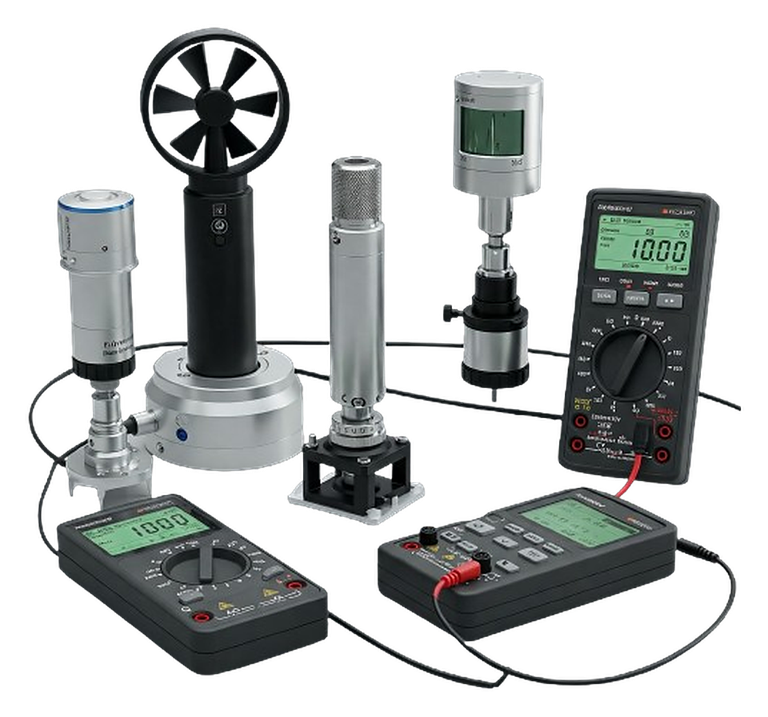
Overview
What it does and where it fits.
An anemometer measures the speed of moving air. In building services it is the basic tool for testing, adjusting and balancing (TAB): velocity readings across a grille, diffuser face or duct section are multiplied by the effective area to give air volume, which is then compared with the design value.
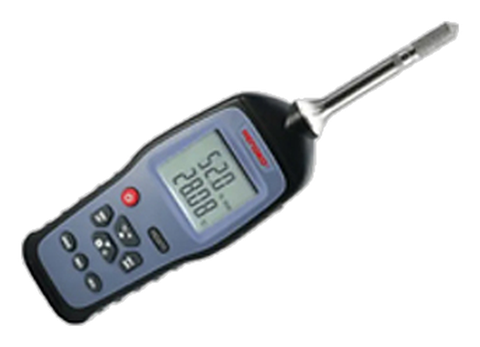
The sensing method decides where a meter works best. A rotating vane averages velocity over its face and suits grilles, coil faces and filter banks. A hot-wire probe is cooled by the airflow and is sensitive at low velocities, so it is used inside ducts through a small test hole and at openings where air moves slowly.
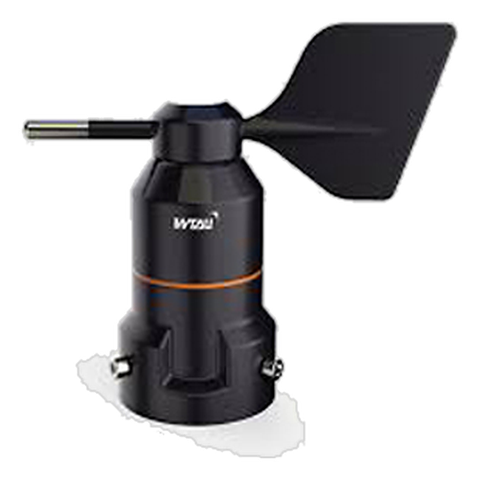
Cup and ultrasonic anemometers measure outdoor wind speed. Cup types are the common choice for weather stations; ultrasonic types have no moving parts and can also give wind direction. Range, resolution and accuracy depend on the model and probe, so Pioneer confirms them on the model datasheet with the quotation.
Types
- Vane anemometerRotating vane head that averages velocity over its face; the usual choice for grilles, diffusers, coil faces and filter banks.
- Hot-wire anemometerHeated-wire probe that responds well at low air velocities and fits through a small duct test hole.
- Cup anemometerRotating cups on a vertical axis; the common type for weather stations and site wind monitoring.
- Ultrasonic anemometerMeasures wind speed and direction with ultrasonic pulses and has no moving parts to wear.
Features
- Vane, hot-wire, cup and ultrasonic sensing
- Readings in m/s, km/h, mph, knots or ft/min
- Handheld, battery-powered meters for site use
- Digital display for direct reading
- Data logging on selected models
- Wind direction on selected models
Applications
- Air balancing at grilles, diffusers and duct openings
- HVAC troubleshooting and performance verification
- Ventilation and exhaust airflow checks in industrial plants
- Weather and site wind monitoring
- Wind checks before crane lifts and work at height on construction sites
- Wind checks for sailing and drone operation
Specifications
Spec table.
Standard ranges and materials. Tell us your medium, range and connection and we will match the model.
| Parameter | Value |
|---|---|
| Measured variable | Air velocity / wind speed; wind direction on selected models |
| Sensing types | Rotating vane, hot-wire, cup, ultrasonic |
| Display units | m/s, km/h, mph, knots, ft/min |
| Format | Handheld portable meters; cup and ultrasonic types for outdoor wind monitoring |
| Display | Digital |
| Data logging | Available on selected models |
Measuring range, resolution and accuracy depend on the model and probe. Share the velocities you expect and Pioneer will confirm the model datasheet with the quotation.
For consultants
Consultant spec clause.
Paste it into your technical specification or BOQ, then adjust ranges and quantities to your schedule.
1. Supply of a portable digital anemometer for measurement of air velocity during testing, adjusting and balancing of air-distribution systems, to be handed over with the facility management instrument kit.
2. The anemometer shall be of the rotating-vane type for grilles, diffusers and coil faces (hot-wire probe type where low velocities or in-duct readings through a test hole are required).
3. The instrument shall have a digital display reading in m/s (ft/min selectable), with data logging where specified in the schedule.
4. Measuring range, resolution and accuracy shall suit the design air velocities and shall be stated in the bidder's technical datasheet for approval.
5. The instrument shall be battery-operated and supplied with batteries, carrying case, operating manual and a manufacturer's test/calibration certificate.
Make: Pioneer Industrial Instruments, Pune, or approved equivalent.
Should I use a vane or a hot-wire anemometer for air balancing?
Use a vane anemometer at grilles, diffusers, coil faces and filter banks, where the large head averages velocity across the opening. Use a hot-wire anemometer for low velocities and for traverses inside a duct, because the slim probe goes through a small test hole and responds well at low air speeds. Balancing teams often carry both. Pioneer supplies both types; tell us the velocities you expect so the range is right.
How do I convert anemometer readings into airflow in m³/h or CFM?
Multiply average velocity by the effective area. For a duct, take a traverse of readings across the section, average them and multiply by the internal cross-sectional area: m/s × m² × 3,600 gives m³/h. For a grille, use the free (effective) area from the grille maker's data, not the overall face size, otherwise the airflow will be overstated.
What is the difference between a cup anemometer and an ultrasonic anemometer?
A cup anemometer turns at a speed proportional to wind speed. It is simple and widely used at weather stations, but its bearings wear and it needs a separate vane for direction. An ultrasonic anemometer measures how the wind changes the travel time of sound pulses between transducers, so it has no moving parts, reads speed and direction together and responds quickly to gusts.
How often should a handheld anemometer be calibrated?
Most users recalibrate once a year, or sooner if the meter is dropped, the vane is damaged or readings drift against a reference. Vane heads are affected by bent blades and dirty bearings, hot-wire probes by dust and oil on the sensor, so keep probes capped when not in use. Consultants usually ask for a valid calibration certificate before accepting readings in a TAB report.
Related