Environmental Monitoring · MI
Moisture Meters — Pin and Pinless Meters for Wood and Building Materials
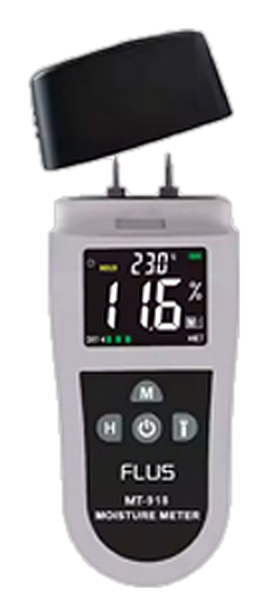
Pioneer supplies handheld moisture meters for wood, building materials, soil, paper and textiles: pin-type meters that read electrical resistance between two pins, pinless meters that sense moisture electromagnetically without marking the surface, and combined meters with both modes.
- Display: Digital
Overview
What it does and where it fits.
A moisture meter estimates the water content of a material so that problems are found before they cause damage. In buildings that means damp walls and roofs, wet subfloors before flooring is laid, and timber that will shrink, warp or rot. In industry it covers timber, paper, textiles and soil.
Pin meters drive two pins into the material and measure the electrical resistance between them; wetter material conducts better. They read at the depth of the pins and suit timber and spot checks. Pinless meters use an electromagnetic field to sense moisture below the surface without leaving holes, which makes them quicker for scanning large areas and suitable for finished surfaces.
Readings depend on the material, so meters carry settings for wood species or building materials, and readings on masonry and concrete are best treated as comparative. Pioneer confirms ranges and material settings on the model datasheet with the quotation.
Types
- Pin-type moisture meterTwo pins measure electrical resistance at a known depth; suited to timber and spot checks.
- Pinless (non-invasive) moisture meterElectromagnetic sensing without penetrating the surface, for scanning walls, floors and finished materials.
- Combined pin and pinless meterOne meter with both modes: scan with pinless, then confirm suspect areas with pins.
Features
- Pin, pinless and combined meters
- Material settings for wood species or building materials on selected models
- Non-marking pinless scanning
- Data hold
- Digital display
Applications
- Building inspection: damp walls, floors and roofs
- Subfloor and screed checks before flooring
- Water damage assessment and drying monitoring
- Timber and joinery moisture checks
- Soil moisture for irrigation management
- Paper and textile production and storage
Specifications
Spec table.
Standard ranges and materials. Tell us your medium, range and connection and we will match the model.
| Parameter | Value |
|---|---|
| Measuring principle | Pin type (electrical resistance), pinless (electromagnetic), combined |
| Materials | Wood, building materials, soil, paper, textiles |
| Material settings | Pre-programmed wood species or building material calibrations on selected models |
| Functions | Data hold |
| Display | Digital |
Measuring range and accuracy depend on the model and the material setting. Pioneer confirms them on the model datasheet with the quotation.
For consultants
Consultant spec clause.
Paste it into your technical specification or BOQ, then adjust ranges and quantities to your schedule.
1. Supply of a portable digital moisture meter for checking walls, floors, screeds and timber during finishing works, to be handed over with the facility management instrument kit.
2. The meter shall be a combined pin and pinless type (pin type or pinless type where specified), with a digital display and data hold.
3. The meter shall have calibration settings for wood and for building materials.
4. Measuring range and accuracy for each material setting shall be stated in the bidder's technical datasheet for approval.
5. The meter shall be supplied with batteries, carrying case, operating manual and a manufacturer's test/calibration certificate.
Make: Pioneer Industrial Instruments, Pune, or approved equivalent.
Pin or pinless moisture meter: which should I choose?
Choose pin type when you need a reading at a known depth, for example in timber or when confirming a suspect spot, and small holes do not matter. Choose pinless to scan finished walls, floors and large areas quickly without marking them; it reads a fixed depth below the surface. A combined meter does both: scan with pinless first, then confirm high readings with the pins.
Can a moisture meter tell me if a concrete floor is dry enough for flooring?
Only as a screening tool. A moisture meter quickly shows wetter and drier areas across a slab or screed, which tells you where to test and lets you follow drying over time. Flooring and adhesive suppliers usually set acceptance limits as relative humidity in the slab or by a named test method, so follow their requirement for the final go-ahead.
Why do moisture meter readings differ between materials?
The meter senses electrical resistance or dielectric properties, not water directly, and each material responds differently. Wood species differ in density, and plaster, brick and concrete contain salts that raise conductivity. That is why meters carry material or species settings. Use the correct setting, and on masonry treat readings as relative by comparing suspect areas with a known dry area of the same material.
What causes false high readings on a pinless moisture meter?
Metal close behind the surface, such as pipes, conduit, reinforcement or foil-backed insulation, pushes pinless readings up, as do surface condensation and salts in old plaster. Wipe the surface dry, move away from known services and compare with nearby areas. Confirm any high reading with pins or another method before opening up a wall or floor.
Related