Specialty Instruments · UI
Clean Room Monitors — Room Pressure, Temperature and Humidity Panels
Pioneer supplies clean room monitors for pharmaceutical, biotech, electronics and hospital cleanrooms: flush-mounted 316L stainless steel room panels with built-in temperature, humidity and differential pressure sensing, up to three 4–20 mA or 0–10 V inputs and three 0–10 V outputs, plus particle counters and air samplers on request.
- Analogue outputs: Up to 3 (0–10 V)
- Display: Channels 1 to 3, shown together or in turn
Overview
What it does and where it fits.
A cleanroom stays clean only while its pressure cascade, temperature, humidity and air changes stay within the limits it was qualified for. A room monitor at the entry door lets operators and QA see those values before anyone goes in, and its outputs let the BMS or environmental monitoring system (EMS) log them and raise alarms.
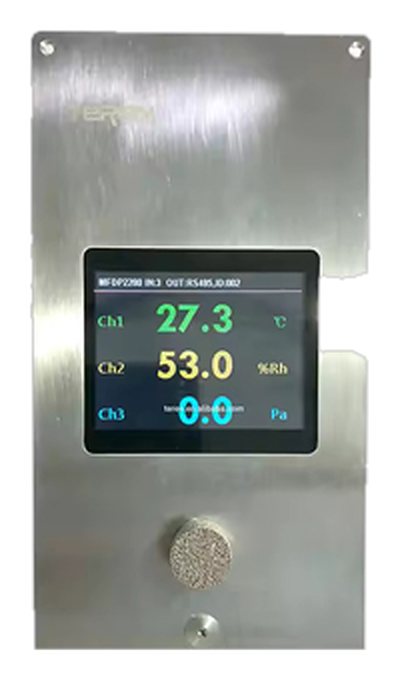
Pioneer's cleanroom panel has a 316L stainless steel front, 1.5 mm thick, that mounts flush with the wall or partition panel and can be wiped down. It has built-in temperature, relative humidity and differential pressure sensing, shows up to three channels together or in turn, and is available in mini, horizontal and vertical formats.
Particle counts are the primary measure of cleanroom class under ISO 14644-1 and need a separate optical particle counter. Pioneer can also supply particle counters, condensation particle counters and microbial air samplers on request. For corridors, stores and support areas outside the cleanroom envelope, a wall-mounted temperature and humidity transmitter with display is available.
Types
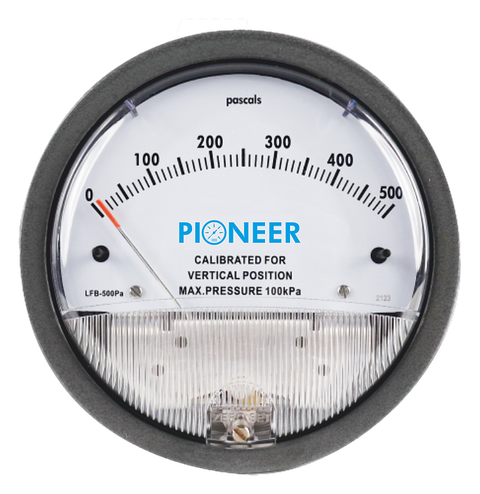
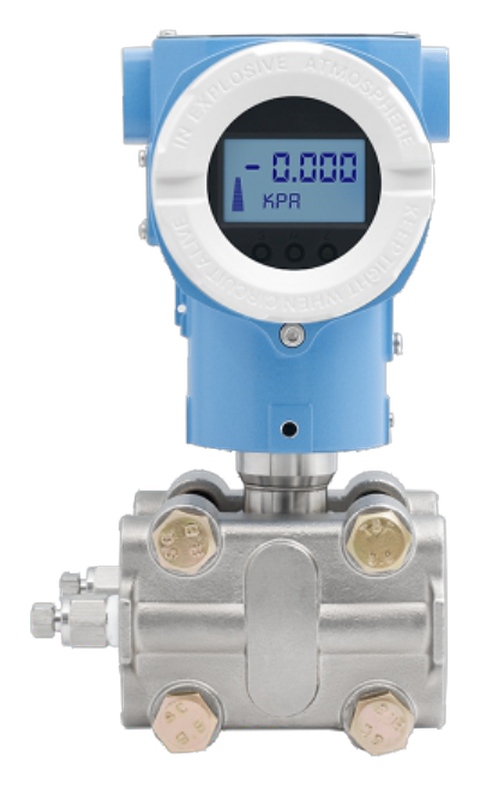
- Cleanroom room panel (T/RH/DP)Flush 316L stainless steel panel with built-in temperature, humidity and differential pressure sensing, in mini, horizontal or vertical format.
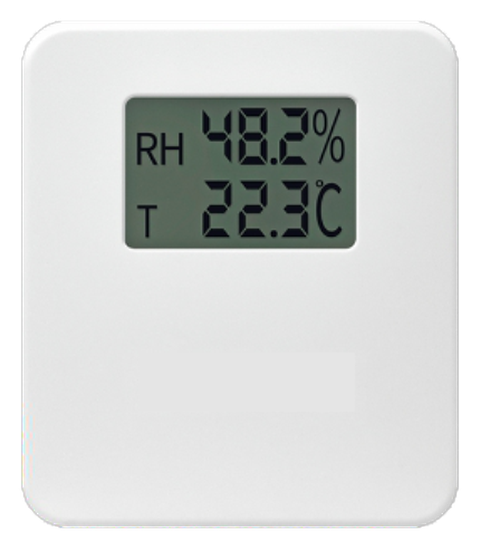
- Wall-mounted temperature and humidity transmitter with displayDual-display T/RH transmitter with replaceable probe and RS485, 4–20 mA, 0–5 V or 0–10 V output for support areas and stores.
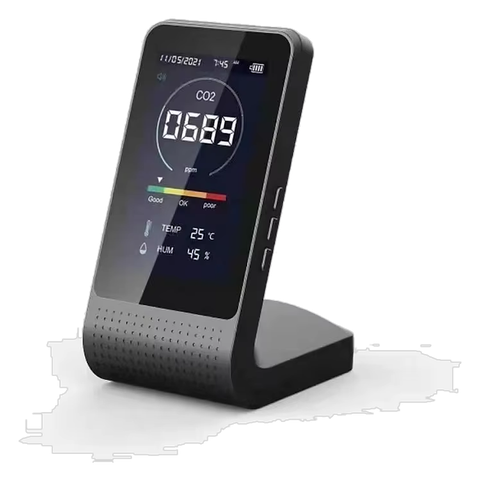
- Optical particle counterLight-scattering counter for airborne particle counts by size channel, used for classification and routine monitoring.
- Condensation particle counterCounts very small particles, down to the nanometre range, for research and semiconductor applications.
- Microbial air samplerCollects airborne particles on media for microbial identification in aseptic areas.
Features
- 316L stainless steel front panel, 1.5 mm thick, for flush mounting
- Built-in temperature, humidity and differential pressure sensing
- Up to 3 analogue inputs (4–20 mA or 0–10 V)
- Up to 3 analogue outputs (0–10 V) to BMS or EMS
- Channels 1 to 3 displayed together or in turn
- Mini, horizontal and vertical panel formats
- Particle counters and air samplers on request
Applications
- Pharmaceutical manufacturing and sterile compounding
- Biotechnology and cell culture labs
- Semiconductor and electronics assembly
- Medical device manufacturing
- Hospital operating rooms and pharmacies
- Aerospace component assembly
- Data centres
Specifications
Spec table.
Standard ranges and materials. Tell us your medium, range and connection and we will match the model.
| Parameter | Value |
|---|---|
| Built-in sensing | Temperature, relative humidity, differential pressure |
| Analogue inputs | Up to 3 (4–20 mA or 0–10 V); default 0–10 V |
| Analogue outputs | Up to 3 (0–10 V) |
| Display | Channels 1 to 3, shown together or in turn |
| Resolution | 0.1 engineering unit |
| Power supply | 16–28 V AC / 16–35 V DC |
| Working environment | 0–50 °C, 0–95 %RH non-condensing |
| Front panel | 316L stainless steel, 1.5 mm thick |
| Panel formats | Mini, horizontal, vertical |
Wall-mounted temperature and humidity transmitter with display
| Parameter | Value |
|---|---|
| Power supply | 10–30 V DC |
| Probe temperature range | -40 to +80 °C standard; -40 to +120 °C with high-temperature probe |
| Probe humidity range | 0–100 %RH |
| Accuracy | Temperature ±0.5 °C (at 25 °C); humidity ±3 %RH (at 60 %RH, 25 °C) |
| Long-term stability | Temperature ≤0.1 °C/year; humidity ≤1 %RH/year |
| Response time (1 m/s air speed) | Temperature ≤25 s; humidity ≤8 s |
| Transmitter operating conditions | -40 to +60 °C, 0–80 %RH |
| Output | RS485 (Modbus), 4–20 mA, 0–5 V, 0–10 V |
| Enclosure size | 110 x 85 x 44 mm |
Differential pressure, temperature and humidity ranges of the panel, and particle counter specifications, are confirmed per model at enquiry.
For consultants
Consultant spec clause.
Paste it into your technical specification or BOQ, then adjust ranges and quantities to your schedule.
1. Each cleanroom shall be provided with a room monitoring panel at the entry, displaying room temperature, relative humidity and differential pressure with respect to the adjacent area.
2. The panel shall have a 316L stainless steel front plate, not less than 1.5 mm thick, flush mounted in the wall or partition panel with a cleanable, gap-free finish.
3. Temperature, humidity and differential pressure sensing shall be built in; ranges shall suit the room design conditions and pressure cascade shown on the drawings.
4. The panel shall display all three parameters together [or in turn] with a resolution of 0.1 engineering unit.
5. The panel shall provide three 0–10 V analogue outputs for connection to the BMS/EMS, and shall accept up to three 4–20 mA or 0–10 V external inputs where scheduled.
6. Power supply shall be 24 V AC/DC; the panel shall operate at 0–50 °C and 0–95 %RH non-condensing.
7. Particle counters and microbial air samplers, where scheduled, shall be supplied as separate instruments to suit the cleanroom class under ISO 14644-1.
8. Each panel shall be supplied with a manufacturer's test/calibration certificate for each built-in sensor and a wiring diagram.
Make: Pioneer Industrial Instruments, Pune, or approved equivalent.
What differential pressure should be maintained between cleanroom areas?
A common design figure is 10–15 Pa between adjacent rooms of different cleanliness grades, with the cleaner room at higher pressure so air flows outwards. Containment suites reverse the cascade so air flows inwards. The actual values come from the room design and the applicable GMP guidance. The room panel should display the differential pressure for each door, and alarm through the BMS or EMS if it falls outside limits.
Does a room monitoring panel classify the cleanroom?
No. Cleanroom classification under ISO 14644-1 is based on airborne particle counts at specified sampling locations, measured with an optical particle counter. A room panel continuously monitors the conditions that keep the room within its class: pressure, temperature and humidity. Most facilities use both, with particle counting for classification and routine monitoring, and room panels for continuous display and alarms.
Why specify a 316L stainless steel flush panel?
Cleanroom surfaces must be smooth, non-shedding and able to withstand repeated cleaning with disinfectants. A flush 316L stainless steel front sits level with the wall panel, leaving no ledges for particles to settle on, and resists corrosion from cleaning agents. Pioneer's panel uses a 1.5 mm 316L plate and is available in mini, horizontal and vertical formats to suit the wall layout.
How is the panel connected to the BMS or EMS?
The panel provides up to three 0–10 V analogue outputs, typically one each for temperature, humidity and differential pressure, which are wired to BMS or EMS analogue inputs for trending, alarms and batch records. It can also accept up to three external 4–20 mA or 0–10 V signals for display, for example from a separate pressure transmitter or particle counter.