Key takeaways
- A BTU meter measures delivered cooling energy as flow × ΔT × the heat capacity of water, so the bill follows actual use, not floor area.
- Fixed per-square-foot or per-ton charges are simple but shift cost from heavy users to light users and give nobody a reason to save.
- Metered tenants tend to switch off fan coil units and AHUs out of hours, which lowers chiller load for the whole building.
- The same meters report flow and ΔT, the two numbers needed to diagnose low-ΔT problems and calculate plant kW/TR.
- Metering only pays off if the meter is sized by flow rate, uses matched temperature sensors and is read automatically through the BMS.
How cooling is charged without a meter
In many Indian commercial buildings, IT parks and malls, chilled water from a central plant is recovered from tenants as a fixed charge. The common bases are:
- Per square foot of leased area, often bundled into CAM (common area maintenance) or HVAC charges.
- Per ton of connected load, based on the rated capacity of the tenant's AHUs or fan coil units.
- Per operating hour, for extended or weekend air-conditioning outside standard building hours.
These methods are easy to administer and need no hardware. Their weakness is that they say nothing about how much cooling each tenant really uses. A data room running 24 hours a day and an office that closes at 6 pm can pay the same rate per square foot.
What a BTU meter measures
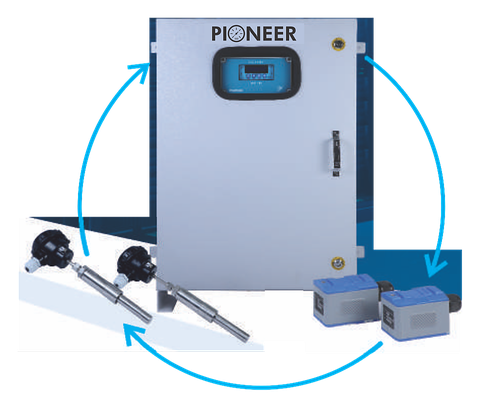
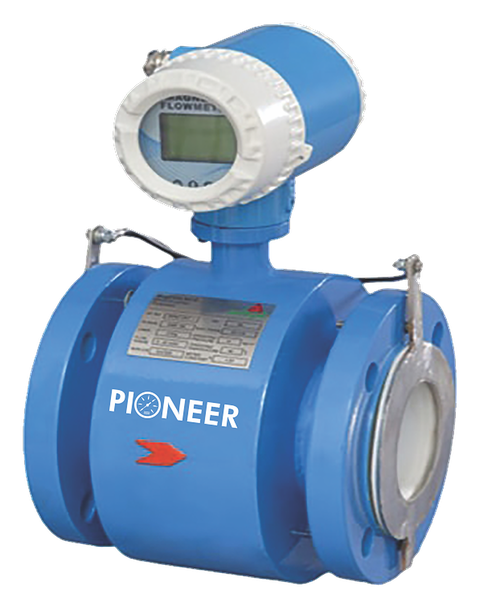
A BTU meter (also called a thermal energy meter or chilled water energy meter) combines three parts: a flow sensor in the supply or return pipe, a matched pair of temperature sensors on supply and return, and a calculator that integrates the result over time. For water, the instantaneous cooling load is:
Cooling (kW) ≈ flow (m³/h) × ΔT (°C) × 1.163
The factor 1.163 comes from the specific heat of water (about 4.186 kJ/kg·K) and its density, converted to hours. One ton of refrigeration (TR) equals about 3.517 kW, or 12,000 BTU/h.
| Example | Flow | ΔT | Cooling load |
|---|---|---|---|
| Small office floor | 10 m³/h | 5 °C | ≈ 58 kW ≈ 16.5 TR |
| Large tenant | 50 m³/h | 5 °C | ≈ 291 kW ≈ 82.7 TR |
| Same tenant, poor ΔT | 50 m³/h | 3 °C | ≈ 174 kW ≈ 49.6 TR |
The calculator totals this into kWh or TR-hours (1 TR-hr ≈ 3.517 kWh), which becomes the billing quantity. For sensor sizing and the EN 1434 standard, see our BTU meter selection guide for chilled water.
Metered billing vs fixed charges: side by side
| Aspect | Fixed charge (per sq ft or per TR connected) | BTU-metered billing |
|---|---|---|
| Basis of bill | Area or rated equipment capacity | Measured cooling energy (kWh or TR-hr) |
| Fairness between tenants | Light users subsidise heavy users | Each tenant pays for what it uses |
| Incentive to save | None; saving does not change the bill | Direct; switching off reduces the bill |
| Disputes | Common when usage patterns differ widely | Fewer, if meters are accurate and readings are transparent |
| Hardware and upkeep | None | Meter per tenant or zone, periodic verification |
| Plant data | None at tenant level | Flow, ΔT and load per zone, logged in the BMS |
| Out-of-hours AC | Charged by logged hours or on request | Captured automatically in consumption |
Many buildings use a hybrid: a fixed capacity or demand component that recovers the capital and standing cost of the plant, plus a metered consumption component. District cooling schemes in the Middle East commonly bill this way. The fixed part keeps plant cost recovery stable; the metered part rewards efficient tenants.
The main benefits of BTU meters
- Fair, defensible bills. Tenants receive a bill based on a measured quantity they can verify, which reduces arguments at lease renewal.
- Lower total consumption. When the bill follows use, tenants have a reason to switch off AHUs and FCUs after hours, set sensible thermostat points and close doors. Every kWh of cooling they avoid is also a saving in chiller power for the building.
- Plant efficiency data. Total cooling delivered (from the main header meter) divided into chiller, pump and cooling tower power gives plant kW/TR, the standard measure of chiller plant efficiency.
- Early fault detection. A falling ΔT on one zone points to a stuck-open control valve, a bypass or a fouled coil. Without zone meters this "low ΔT syndrome" usually shows up only as extra chillers and pumps running.
- Out-of-hours cooling captured automatically. No logbooks or manual requests; consumption at night or on weekends simply appears in the reading.
- Green building and energy audit support. Rating systems such as LEED give credit for advanced energy metering, and energy auditors need measured end-use data rather than estimates.
Where metering does not pay off
BTU meters are not always worth it. A single-occupier building with one chiller plant may need only a main header meter for kW/TR, not one per floor. Very small tenancies with low and steady loads may cost more to meter and read than the billing difference justifies. And a meter that is badly sized or wrongly installed is worse than none, because it produces bills that tenants rightly dispute.
For the metering to deliver its benefits, check these points at the specification stage:
- Size the flow sensor by the actual design and minimum flow rate, not the pipe size.
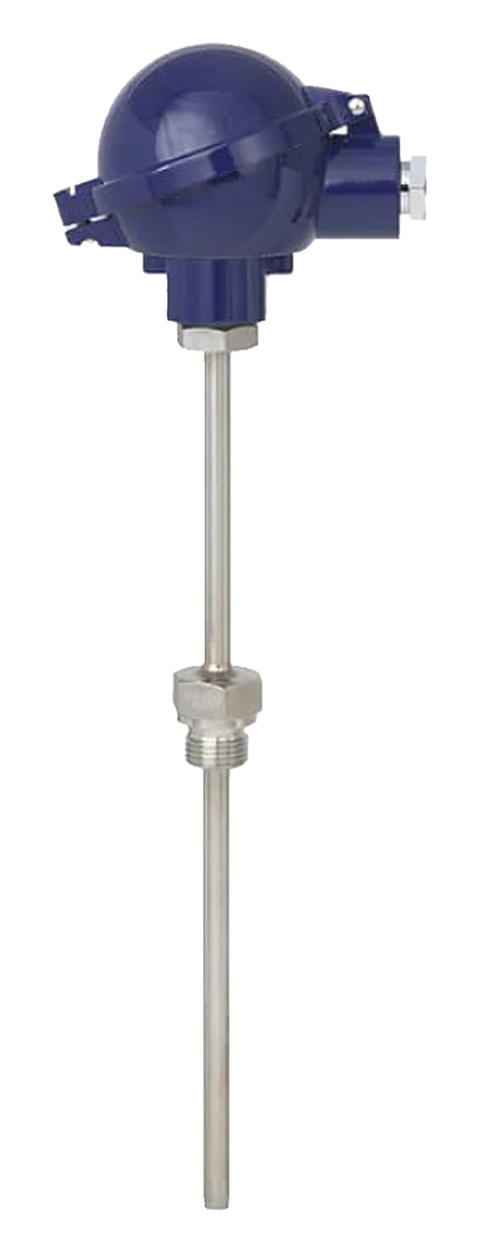
- Use a matched pair of temperature sensors (Pt100 or Pt500 RTDs) so the ΔT error stays small at the low ΔT typical of chilled water.
- Provide the straight pipe runs the flow sensor needs, and isolation valves for service.
- Read the meters automatically over M-Bus, Modbus or BACnet into the BMS, so billing does not depend on manual readings.
- Agree the billing method, meter location and verification interval in the lease before the meters go in.
Existing buildings moving from fixed charges to metering can often fit clamp-on or insertion flow sensors without draining the system; our BTU meter retrofit guide covers the survey and shutdown planning.
BTU meter vs flow meter: what is the difference?
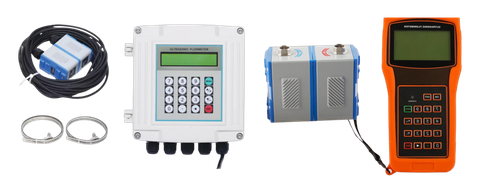
A flow meter measures only how much water passes. A BTU meter adds the supply and return temperatures and a calculator, so it measures energy. Two tenants can draw the same flow but very different cooling if one has a 6 °C ΔT and the other 3 °C; only a BTU meter tells them apart. The flow sensor inside a BTU meter is typically electromagnetic, ultrasonic or mechanical, chosen by pipe size, water quality and accuracy needed.