Flow Instruments · FI
Tube Glass Rotameters — Variable Area Flowmeters
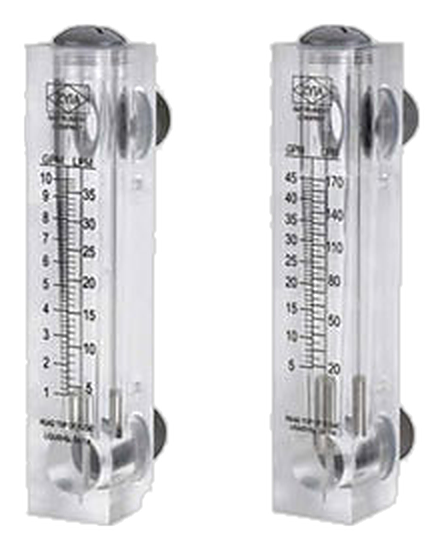
A glass tube rotameter is a variable area flowmeter that shows liquid or gas flow by the height of a float in a tapered tube, read against a scale. Pioneer supplies glass tube rotameters for clean liquids and gases where a simple, unpowered, visual flow check is enough.
- Principle: Variable area, float in tapered tube
Overview
What it does and where it fits.
Fluid flows upward through a tapered glass tube, usually borosilicate. The float rises until the upward force of the fluid balances its weight, and because the annular gap widens with height, each float position corresponds to one flow rate. The rate is read directly from the scale at the float's reading edge.
Rotameters need no power, have a low pressure drop and read low flows well, which suits purge gas, analyser sample lines, chemical dosing, water treatment and laboratory rigs. They must be mounted vertically with flow upward, and the scale is valid only for the fluid density and viscosity it was calibrated for.
Glass tubes have pressure and temperature limits and can break, so they are used on clean, low-pressure services. Send the fluid, flow range, pressure and temperature so the tube, float and scale can be matched.
Types
- Liquid rotameterScaled for water or the specified liquid in LPH or LPM.
- Gas rotameterScaled for air, nitrogen or the specified gas at stated pressure and temperature, in LPM or Nm³/h.
- Rotameter with needle valveIntegral valve for setting purge or sample flow.
Features
- Direct visual flow indication
- No power or electronics required
- Low pressure drop
- Good for low flow rates
- Borosilicate glass tube with scale
- Simple to install and maintain
- Economical
Applications
- Purge gas monitoring
- Gas analyser sample flow
- Laboratory gas and liquid flow
- Water treatment and chemical dosing
- Clean liquids and gases in chemical processing
- Medical equipment and OEM panels
Specifications
Spec table.
Standard ranges and materials. Tell us your medium, range and connection and we will match the model.
| Parameter | Value |
|---|---|
| Principle | Variable area, float in tapered tube |
| Tube | Glass, typically borosilicate |
| Media | Clean liquids and gases |
| Mounting | Vertical, flow upward |
| Power | None required |
| Scale | Calibrated for the specified fluid |
Flow range, tube length, float and O-ring material, end connections and pressure rating are selected to the application.
For consultants
Consultant spec clause.
Paste it into your technical specification or BOQ, then adjust ranges and quantities to your schedule.
1. Flow indicator shall be of variable area (rotameter) type with a borosilicate glass tapered tube and float, for the specified clean liquid (gas).
2. Scale shall be calibrated directly in the specified engineering units for the actual fluid and operating conditions, with the flow range selected so that normal flow lies in the middle part of the scale.
3. Float, end fittings and O-rings shall be compatible with the process fluid.
4. Rotameter shall be rated for the specified process pressure and temperature, with a protective cover over the glass tube.
5. An integral needle valve shall be provided where flow setting is required.
6. Rotameter shall be installed vertically with flow upward, with isolation valves for removal.
7. Each rotameter shall be supplied with a manufacturer's test certificate stating the calibration fluid and conditions.
Make: Pioneer Industrial Instruments, Pune, or approved equivalent.
Why must a rotameter be mounted vertically?
The float settles where the upward force of the fluid balances its weight, so gravity is part of the measurement. The meter must be vertical, with flow entering at the bottom. Even a few degrees of tilt makes the float rub the tube wall and read wrongly. Support the pipework so the meter carries no load.
Can I use a water-calibrated rotameter for another liquid?
Only with a correction. The scale is valid for the density and viscosity it was calibrated for. For a liquid of different density, apply a density correction factor; for a much more viscous liquid, the reading can be badly wrong and the meter should be recalibrated. For gases, pressure and temperature also change the reading, so specify actual operating conditions.
What are the limits of a glass tube rotameter?
Glass tubes are limited in pressure and temperature, can break under shock or water hammer, and should not be used for hazardous or high-pressure fluids. They need clean fluid, because dirt sticks to the float and tube. For opaque liquids, higher pressures or a remote signal, a metal tube rotameter or an electronic flowmeter is better.
How accurate is a glass tube rotameter?
Rotameters are indicators rather than precision meters. Accuracy is usually stated as a percentage of full scale, so the error is largest at low readings. For best results, select a range where normal flow is between about 30% and 80% of the scale. Where you need a transmitted signal or totalising, use an electronic flowmeter.
Related