Flow Instruments · FT
Compressed Air Flowmeters — Measure Air Consumption and Leaks
A compressed air flowmeter measures how much air a plant, header or machine uses, so leaks and waste can be found and compressor energy allocated. Pioneer supplies thermal mass, vortex and differential pressure flowmeters for compressed air, selected to pipe size, pressure and flow range.
Overview
What it does and where it fits.
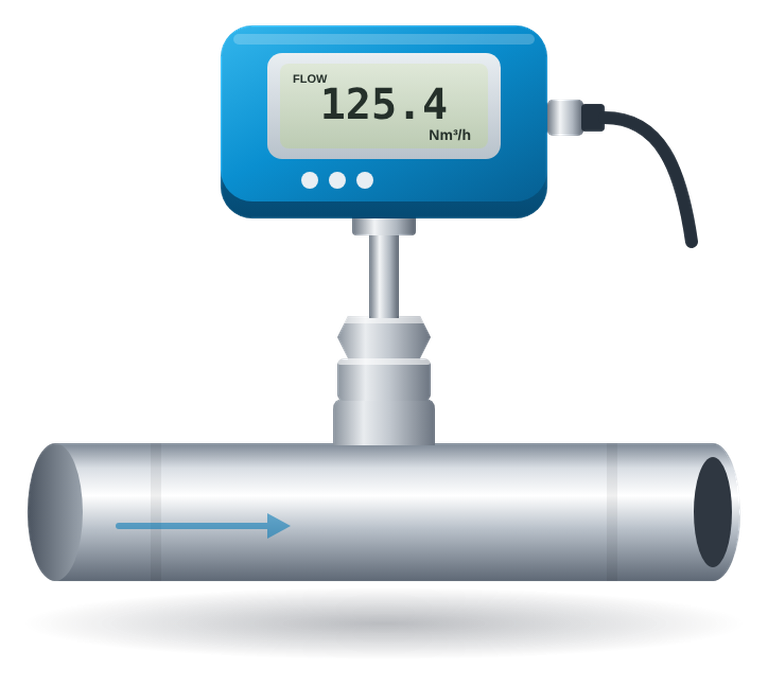
Compressed air is one of the costliest utilities in a plant, and leaks commonly waste a significant share of compressor output. Metering at the compressor outlet and at major branches shows baseline demand, leak flow during non-production hours, and the specific power of the compressor house in kW per m³/min.
Thermal mass flowmeters are the usual first choice: they read mass or normal flow directly, without separate pressure and temperature correction, and have a wide turndown that captures low leak flows. Vortex meters suit larger headers and wet or hotter air. Differential pressure elements are economical on large pipes but need compensation and have limited turndown.
For audits, insertion-type meters can be fitted through a hot-tap ball valve on many lines. Send the pipe size, operating pressure and expected flow range.
Types
- Thermal mass flowmeterReads normal flow (Nm³/h) directly, with wide turndown for leak detection; inline or insertion.
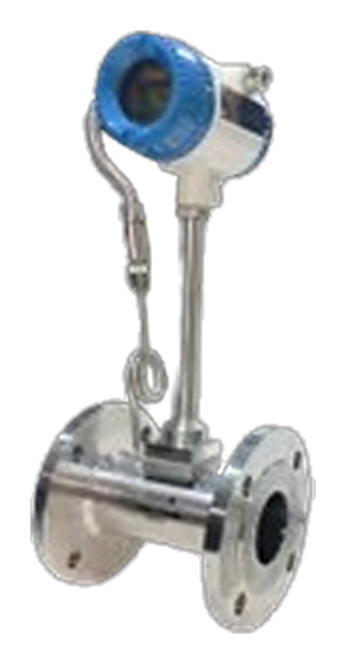
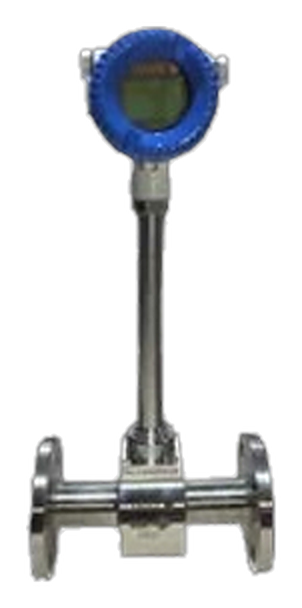
- Vortex flowmeterFor large headers and higher temperatures; add pressure and temperature compensation for normal flow.
- Differential pressure flowmeterOrifice or averaging pitot with a DP transmitter; economical on large pipes.
- Turbine flowmeterLow-cost option for clean, dry, filtered air.
Features
- Measures flow at compressor outlets, headers and branches
- Normal or standard flow (Nm³/h, Sm³/h) with suitable meter or compensation
- Wide turndown on thermal mass meters for leak flows
- 4–20 mA, pulse or digital outputs to BMS, PLC or energy monitoring system
- Inline or insertion mounting
Applications
- Compressor house output and specific power (kW per m³/min)
- Leak detection during non-production hours
- Departmental and machine-level air cost allocation
- Compressed air energy audits
- Monitoring nitrogen and other dry industrial gases
- Preventive maintenance: detecting abnormal consumption
Specifications
Spec table.
Standard ranges and materials. Tell us your medium, range and connection and we will match the model.
| Parameter | Value |
|---|---|
| Technologies | Thermal mass, vortex, differential pressure, turbine |
| Media | Compressed air; nitrogen and other dry, clean gases |
| Outputs | 4–20 mA, pulse or digital display, to suit the selected meter |
| Sizing basis | Pipe size, operating pressure, temperature and flow range |
Line size, flow range, pressure rating and output are selected to the application.
For consultants
Consultant spec clause.
Paste it into your technical specification or BOQ, then adjust ranges and quantities to your schedule.
1. Compressed air flowmeter shall be of thermal mass type (vortex / differential pressure as specified), reading flow at normal conditions in Nm³/h without external compensation.
2. Meter shall be suitable for the specified pipe size and operating pressure, inline (insertion through a ball valve) type.
3. Flow range shall cover both peak demand and minimum non-production (leak) flow at the installed location.
4. Meter shall display instantaneous flow and totalised volume locally.
5. Output shall be 4–20 mA and pulse (RS 485 Modbus as specified) for connection to the energy monitoring system.
6. Meter shall be installed downstream of the air dryer where practicable, with straight lengths as recommended by the manufacturer.
7. Each meter shall be supplied with a manufacturer's calibration certificate and installation manual.
Make: Pioneer Industrial Instruments, Pune, or approved equivalent.
Which flowmeter is best for compressed air?
Thermal mass flowmeters are the most common choice. They read normal or standard flow directly, need no separate pressure or temperature correction, and have a wide turndown that picks up low leak flows. Use vortex meters on large headers or with hot or wet air before the dryer, and averaging pitot or orifice DP meters where cost on very large pipes matters most.
How do I measure compressed air leakage with a flowmeter?
Meter the main header after the receiver and record flow when production is stopped but the system is pressurised. That flow is mostly leakage. Expressed as a percentage of full-load demand, it gives a leak baseline; after a leak-repair campaign, repeat the test to quantify the savings in m³/min and compressor kW.
Where should a compressed air flowmeter be installed?
Install it after the dryer and filters, where the air is clean and dry, on a straight section with enough upstream and downstream pipe as recommended for the meter type. Typical points are the compressor house outlet header and major branches to production halls. Avoid locations straight after valves, regulators or reducers.
What is specific power and why measure it?
Specific power is compressor input power divided by delivered air flow, usually kW per m³/min. It shows how efficiently the compressor house produces air, and it rises with leaks, high pressure set points and poor compressor sequencing. Measuring it continuously needs a flowmeter on the outlet header and an energy meter on the compressors.
Related