Flow Instruments · FT
Turbine Flowmeters — for Clean Liquids and Gases
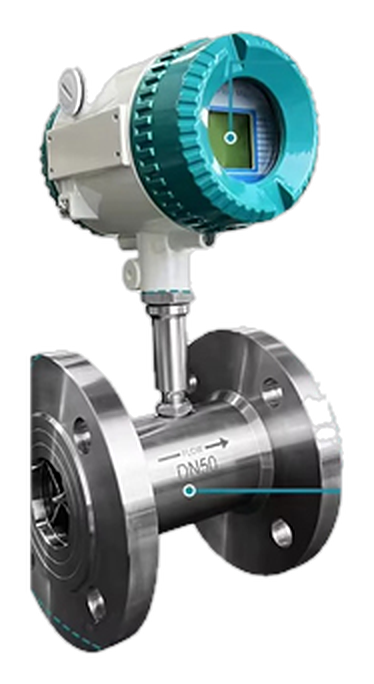
A turbine flowmeter measures the volumetric flow of clean, low-viscosity liquids and gases from the speed of a bladed rotor in the flow stream. Pioneer supplies turbine flowmeters for water, diesel, light oils, chemicals and fuel gases, selected to the customer's fluid, flow range, pressure and temperature.
- Line size, flow range, materials: Selected to the application
Overview
What it does and where it fits.
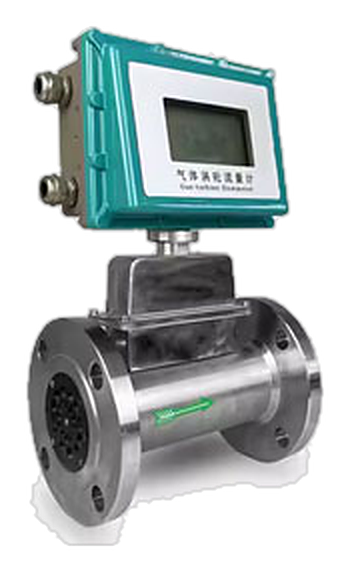
Fluid passing through the meter turns a free-running rotor at a speed proportional to velocity. A magnetic pickup outside the flow detects each passing blade and produces a pulse train whose frequency is proportional to flow rate. Counting the pulses gives the totalised volume.
Turbine meters respond quickly and repeat well, which suits batching, fuel consumption and test benches. They have moving parts, so they need clean fluid: fit a strainer upstream, keep within the rated flow range and plan periodic bearing and rotor checks.
Viscosity affects the calibration, so state the fluid and its viscosity at operating temperature. For gases, see the gas turbine flowmeter page; for dirty or conductive liquids, an electromagnetic meter is usually better.
Types
- Liquid turbine flowmeterFor water, diesel, kerosene, light oils and low-viscosity chemicals.
- Gas turbine flowmeterFor LPG vapour, natural gas and other clean fuel gases; see LPG and gas flowmeters.
- Turbine meter with local displayBattery or loop-powered indicator showing rate and total, for sites without a control system.
Features
- Fast response to flow changes
- Good repeatability on clean, low-viscosity fluids
- Wide rangeability
- Pulse output proportional to flow, suitable for totalising and batching
- Compact inline body
- Lower cost than mass flowmeters
Applications
- Diesel and fuel oil consumption on generators and boilers
- Water flow in distribution, irrigation and industrial processes
- Lubricating oils and hydraulic fluids
- Chemical batching with suitable materials
- Test benches and fuel measurement
- Clean gas flow measurement
Specifications
Spec table.
Standard ranges and materials. Tell us your medium, range and connection and we will match the model.
| Parameter | Value |
|---|---|
| Principle | Axial turbine rotor; magnetic pickup senses blade rotation |
| Media | Clean, low-to-medium viscosity liquids and gases, free of debris |
| Output | Pulse signal, frequency proportional to flow rate |
| Line size, flow range, materials | Selected to the application |
Line size, flow range, materials, pressure rating and output are selected to the application. Send the fluid, viscosity, flow range, pressure and temperature.
For consultants
Consultant spec clause.
Paste it into your technical specification or BOQ, then adjust ranges and quantities to your schedule.
1. Flowmeter shall be of axial turbine type with a free-running rotor and magnetic pickup, suitable for the specified clean, low-viscosity liquid (gas).
2. Meter size shall be selected so that minimum and maximum process flows fall within the meter's linear range.
3. Wetted parts shall be stainless steel or other materials compatible with the process fluid.
4. Meter shall be rated for the specified process pressure and temperature, with process connections to match the line.
5. Output shall be a pulse signal proportional to flow (4–20 mA through a converter, and local rate and total display, as specified).
6. A strainer shall be provided upstream, with straight upstream and downstream lengths as recommended by the manufacturer.
7. Each flowmeter shall be supplied with a manufacturer's calibration certificate stating the K-factor, and an installation manual.
Make: Pioneer Industrial Instruments, Pune, or approved equivalent.
What fluids suit a turbine flowmeter?
Turbine meters suit clean, low-viscosity liquids such as water, diesel, kerosene, light oils and many solvents, and clean gases. They do not suit slurries, fibrous liquids or fluids with particles, which wear or jam the rotor, or high-viscosity oils, which change the calibration. For viscous oils use a positive displacement meter; for dirty water use an electromagnetic meter.
Does a turbine flowmeter need a strainer?
Yes. Debris damages the rotor and bearings and shifts the calibration, so fit a strainer upstream, typically with a mesh suited to the meter size, and clean it regularly. Also provide straight pipe, commonly about 10 diameters upstream and 5 downstream, or a flow straightener, because swirl changes rotor speed and therefore the reading.
How does viscosity affect turbine meter accuracy?
A turbine meter's K-factor (pulses per litre) is calibrated for a given viscosity. As viscosity rises, for example when oil cools, rotor drag increases and the meter under-reads, especially at low flow. State the fluid and its viscosity at operating temperature at enquiry, so the meter can be sized and calibrated for the actual service.
How often does a turbine flowmeter need maintenance?
Because it has a rotor and bearings, a turbine meter wears over time, at a rate that depends on fluid cleanliness, lubricity and how close it runs to maximum flow. Check the strainer often, and verify the meter periodically against a reference, such as a portable ultrasonic meter or a measured tank. Replace the rotor or bearings if readings drift or the meter becomes noisy.
Related